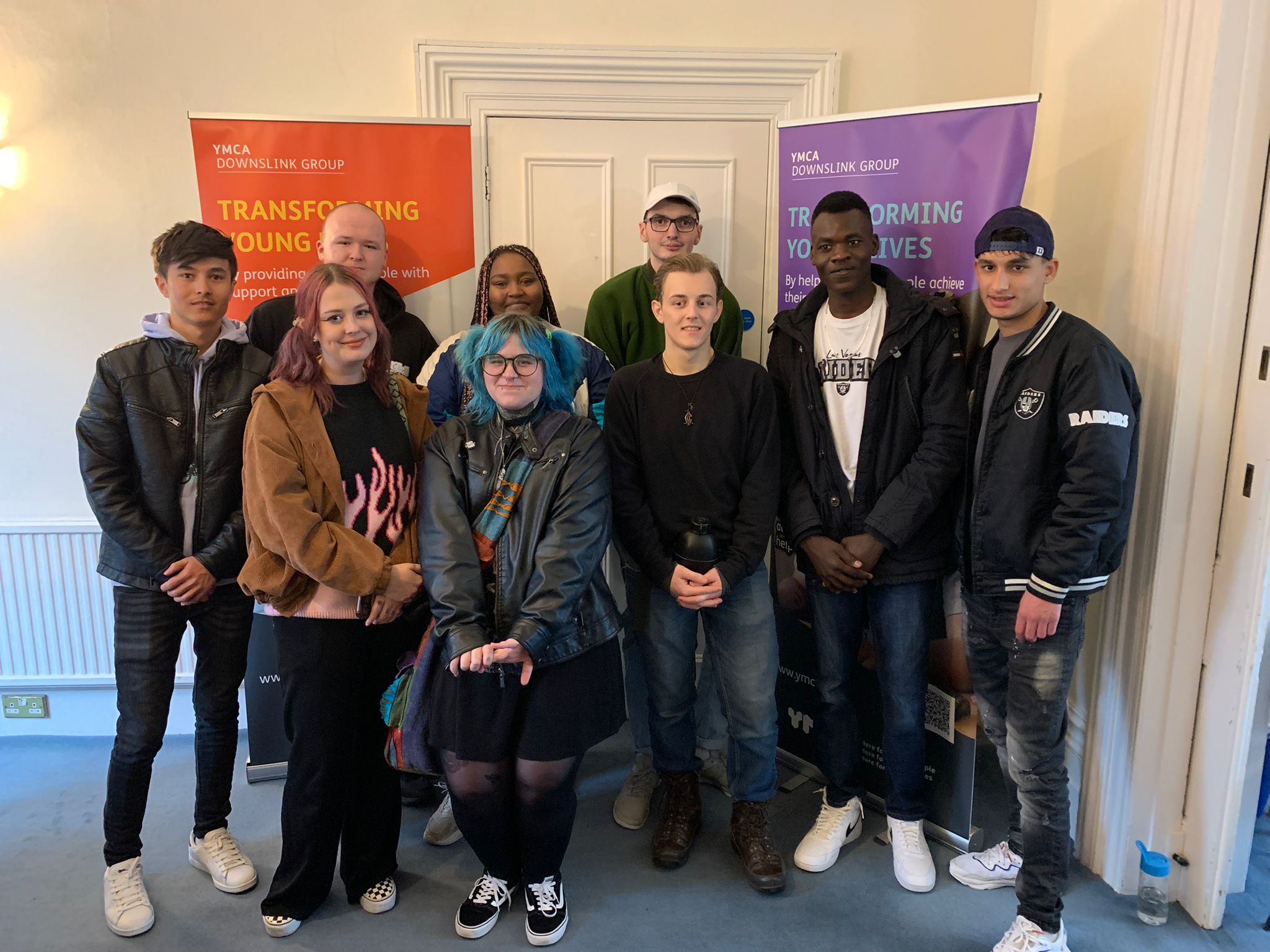
Last month, we held the first ever Youth Council meeting with 9 residents from almost all of our 24-hour accommodation projects. The young people volunteered their time to attend, representing their housing projects and speaking on behalf of other residents.
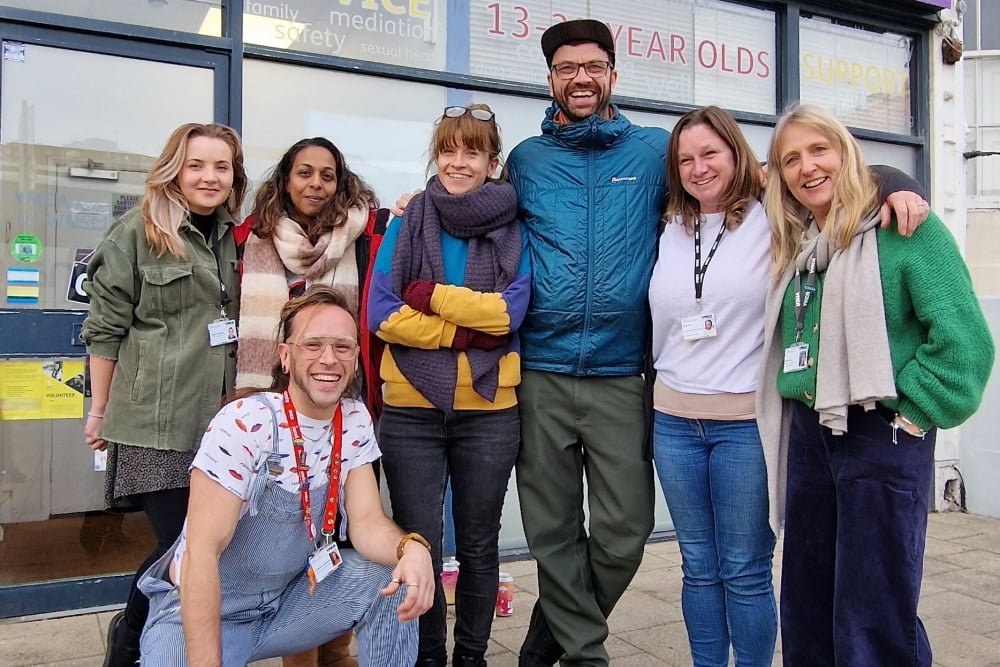
The session was led by the Inspire Team: Aisling, Amy, and Jessica, who created a really engaging session where the young people shared lots of ideas and asked important questions. The residents started by discussing why they wanted to be there, some spoke about their desire to improve aspects of their own projects, while others wanted to meet new people and find out what it’s like in other projects.
After a few ice breakers, everyone was laughing and feeling more relaxed within the group. The young people made it clear that they wanted the sessions to be a safe space where they would all have a chance to speak and would not be spoken over. They also voted on changing the name of ‘Youth Voice Forum’ to ‘Youth Council’ as they felt that better represented them as a group.
It was great to hear the young people speak passionately about their new role, agreeing that they wanted to be an inspiring role model to other residents and a friendly peer to welcome new people into their projects.
At the end of the session, everyone was asked to describe the afternoon in one word, they said: representative, good, enlightening, fun, exciting, funny, decent, interesting, enjoyable, not bad, wonderful, and wonderful meeting everyone.
As the residents were leaving, they said they were really excited for the next session and happy they decided to turn up. We’re so pleased that they also came away having made new friends and feeling empowered to be a role model and help create positive change.
The Youth Council is an excellent platform for residents to have their voices heard so we want to say a huge thank you to the whole Inspire Team for their hard work in making this happen, and to the young people who volunteered their time to be involved. We can’t wait to see what’s next for the Youth Council!
We’re delighted to announce the appointment of Emily Brock as our new Chief Executive. Emily arrives at a crucial moment as we grapple with key issues facing the charity sector, such as the cost of living crisis, and how we can address the growing needs of vulnerable children and young people. With her extensive leadership experience and a strong commitment to driving meaningful change, Emily will spearhead our efforts to strengthen our services and expand impact in this challenging environment.
Most recently, Emily was Executive Director of Transformation and Business Improvement at Two Saints, a charity providing homes and specialist support to people who are homeless or in need across Berkshire, Hampshire, Isle of Wight, Portsmouth, and Southampton. In her role Emily led an ambitious organisational change strategy. With more than 20 years of senior-level experience at organisations such as, RSPCA, Sightsavers and UKTI, she has an impressive track record of delivering impactful results. Additionally, she is Chair at Clock Tower Sanctuary, a Brighton-based drop-in day center for homeless 16-25 year olds, and serves as a Non-Executive Director of the Good Agency.
Commenting on the appointment, Emily says:
“I’m excited to be joining YMCA DownsLink Group as Chief Executive. This is an important moment for the organisation, and I’m committed to making a positive impact. I look forward to working in partnership with the many people and organisations who share a passion for supporting the lives of children and young people.”
Fran Beckett, Chair at YMCA DownsLink Group, said:
“We’re delighted that Emily is joining the organisation and we want to extend a very warm welcome to her. With her track record of exceptional leadership skills, and unwavering commitment to social welfare, Emily is well placed to lead the organisation into a new era of innovation and transformative impact.”
Our charity has been at the forefront of providing support to vulnerable children and young people, addressing issues such as youth homelessness, mental health services, and social exclusion. Under Emily’s leadership, we will focus on our impact and work closely with local communities, businesses, and government agencies to create sustainable solutions to the challenges they face. Our mission is to create a brighter future for young people.
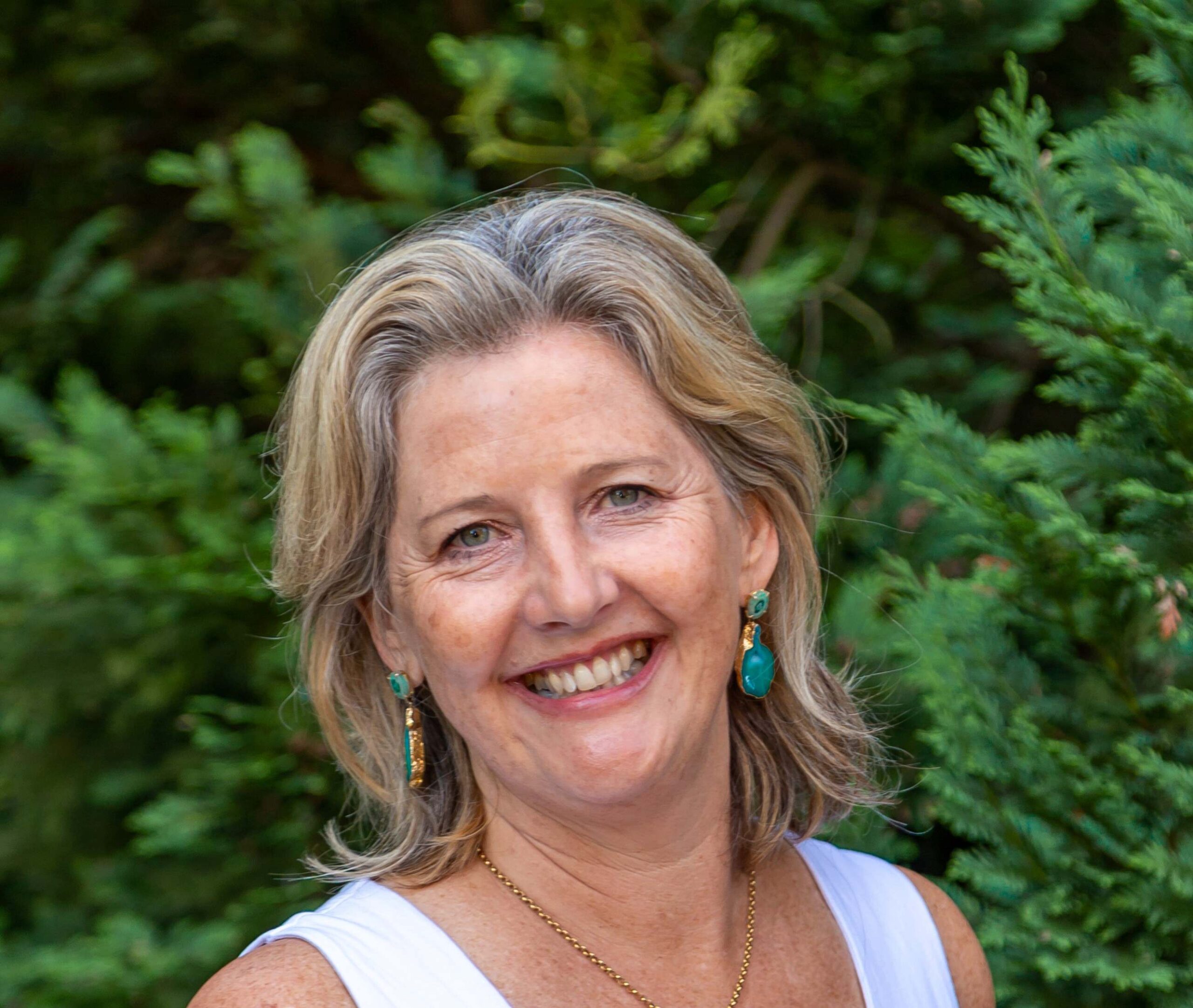
Mary Carmichael, our Family Support Mediator, tells us more about her role and what exactly family mediation involves:
Over the past 6 years I have supported many families with children aged 14-17 who have been in crisis within their relationships. Mediation is such an amazing tool, and it really works to help people in conflict resolve issues and move forward. I greatly enjoy being able to assist parents and their children to have these much-needed conversations and I feel very proud to be a part a team who are committed and dedicated to reducing the risk of youth homelessness in Brighton and Hove.
Family mediation is an opportunity for members of a family (in any make up) to come together to talk about areas of conflict and/or when there has been a breakdown in communication. The space provided is neutral, safe, and confidential and the third-party (mediator) is impartial (doesn’t take sides) independent from any other services (including statutory) and is professionally trained.
Family mediation helps families to resolve conflict by using solution focused strategies. Individuals are given an uninterrupted space to speak honestly about how they feel and listen to one another with no distractions. There is a strong focus on the mediator being non-judgemental and not offering advice, instead to reflect and reframe to enable conflicting parties to recognise, accept and acknowledge their roles within the conflict which then leads to resolution and understanding of each other’s feelings – this would be a good outcome.
Often, young people and their parents’ relationships can become strained. This can be for many reasons; generational difference, expectations that both parties have of the other, change in behaviour, relationship breakdown between parents, substance use, education refusal – to name a few. When communication within family’s breakdown, relationships break down and sometimes it feels hopeless. This can lead to parents feeling they can no longer continue to allow their children to remain living within the family home.
Family mediation helps to prevent youth homelessness by supporting the family and individuals to feel empowered to set their own boundaries which have been negotiated and agreed by all parties. Compromises are reached which resolve disputes where both parties feel they have been listened to, heard and their thoughts and feelings respected. With newfound mutual respect, agreed boundaries and a plan moving forward, parents and young people feel hope and support and it is likely they will want to remain living together.
Click here to read Leo’s story and find out how Mary helped his family improve their communication and avoid evicting 17-year-old Leo.
…
The Family Mediation Service is based at the Youth Advice Centre (YAC) in Brighton. We accept referrals for young people aged 16-25 via any services, or parents. Young people can also contact YAC or come to our centre and ask to be referred to the mediation team.
It’s back! On Saturday 15th July you can take part in our flagship fundraising event, YMCA DownsLink Challenge, a 17.5 mile sponsored walk along the beautiful Downs Link Pathway (from Horsham to Shoreham), knowing every step will help change young lives.
Last year more than 100 of our supporters, staff and residents stepped out to help raise awareness of the issue of youth homelessness and raise money to help us support other young people in crisis. The money raised by the event goes towards providing holistic, wrap-around, care for young people facing homelessness. We want to break the cycle of disadvantage that can begin when young people lose their home, family and support network, at this crucial stage of their lives.
Many of the young people who are given a safe home with us have faced significant challenges in their short lives. Staff get to know them individually and work hard to rebuild their trust in adults and build a positive relationship with them. Once this is established they can get them the help they need, whether it is emotional or practical. They work with the young person to help them back onto the path that’s right for them, such as education, training, or employment.
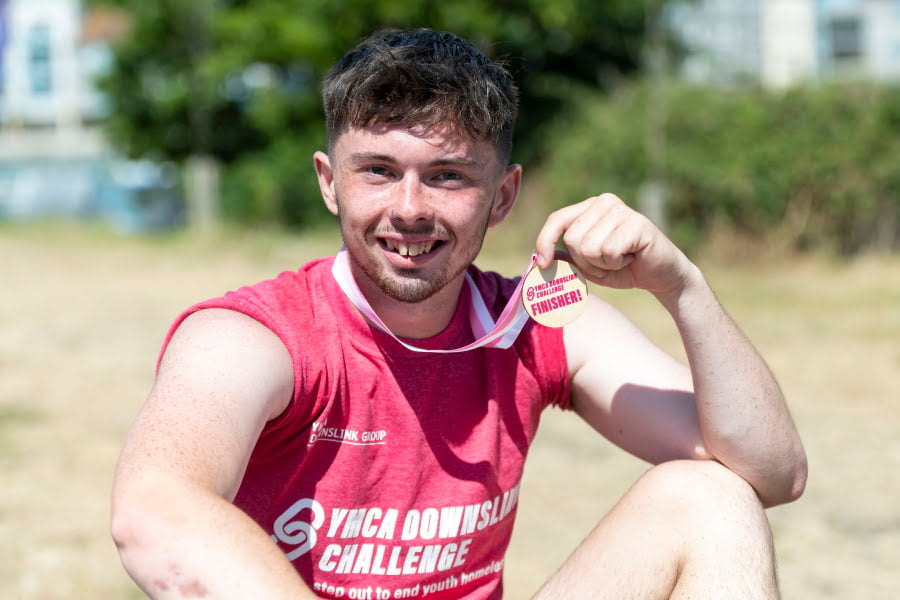
Last year, Josh, a resident in 24-hour accommodation, was encouraged to take part in the challenge. At 19, Josh faced homelessness due to issues at home. He’d lost his confidence and was struggling. When he was given a home with us he began to rebuild his self-esteem. His keyworker encouraged him to get involved in the DownsLink Challenge and it proved to be a turning point. Although it’s not a race, he was one of the first to cross the finish line and was bursting with pride at his achievement.
Josh has since moved into semi-independent living, is working full-time, and has stepped up to become a Youth Ambassador for the national YMCA federation. Having received so much support from us he wants to ‘give back’ and raise awareness of what we do, so that we can help more young people like him.
Josh says:
“The YMCA have helped me so much, I just want other people to get the support I have had. I felt so proud of myself when I did the challenge, I never thought I could walk 17 miles, but I did it and felt so happy with myself. I’m now doing all sorts of things I never thought I would. Without the YMCA I wouldn’t be where I am today.”
By taking part in the DownsLink Challenge you can help give another young person, like Josh, a second chance. Every night we give over 650 young people a safe home. We are facing an unprecedented rise in need, which, coupled with the cost-of-living crisis, is why your support is vitally important. So, why not get involved. You can walk alone or with a group of friends or colleagues. Registration is just £20 which covers our costs and if you can’t walk why not sponsor someone else or donate. Click here for more information.
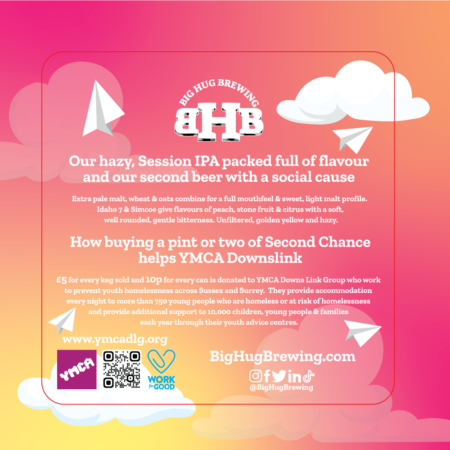
We’re delighted to announce our partnership with Big Hug Brewing via the Work for Good scheme. Work For Good allows small businesses to legally donate and support charities of their choice through sales of their products without any tax or legal implications/complexities.
We were approached by Matt, the founder from Big Hug Brewing after he chanced upon a promotion we were running with Patty & Bun, one of his customers, back in 2021. Matt believes passionately in giving back and having a social cause was a fundamental part of his business and brand values when he set up his bespoke brewing business back in 2014 with the express intention of creating ‘accessible, easy drinking craft beers with a social conscience’.
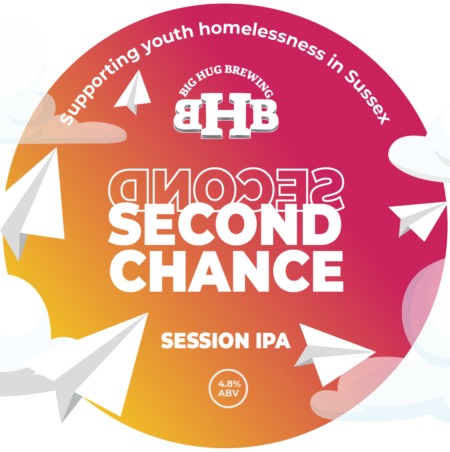
The aptly named, ‘Second Chance’ is a hazy, golden yellow, hop forward, easy drinking Session IPA that Matt developed to help raise awareness of YMCA DownsLink Group’s work to tackle youth homeless, whilst also raising funds. So far Big Hug Brewing have donated £501.40 from sales of ‘Second Chance’ which has gone towards funding emergency accommodation for young people via our Youth Advice Centre in Brighton.
The company has recently brewed a second batch of ‘Second Chance’ with £5 from every 30L keg and 10P from every 440ml can donated via Work For Good and used to help fund the running of our Youth Advice Centre in central Brighton. We’re pleased to be working together and Matt has some great Brighton venues already on board stocking the beer for this year including the Brighton i360, the iconic Lion and Lobster pub, The Walrus and lots of other venues in the pipeline from April.
Thanks to Matt and everyone at Big Hug Brewing for supporting young people to get back on their feet and give them a ‘second chance’ at a brighter future.
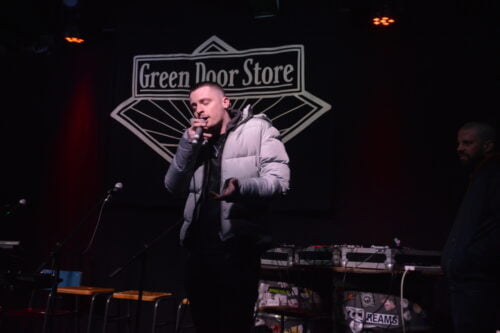
As part of Mental Health Awareness Week 2023, we interviewed Room to Rant counsellor Katy. She told us all about this unique and impactful project, including her proudest moments and what we should know about young men’s mental health.
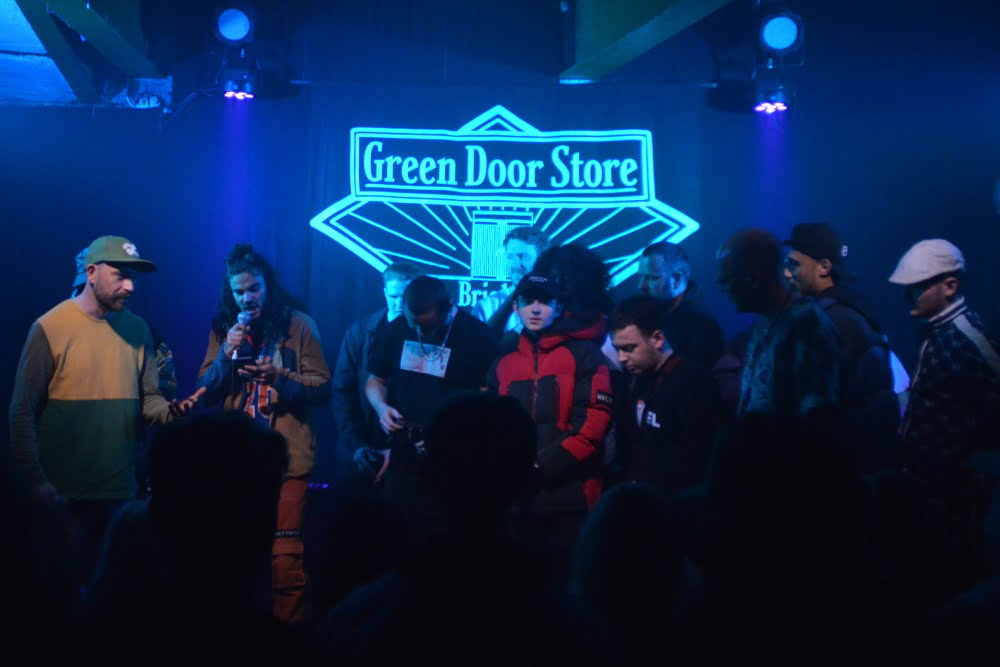
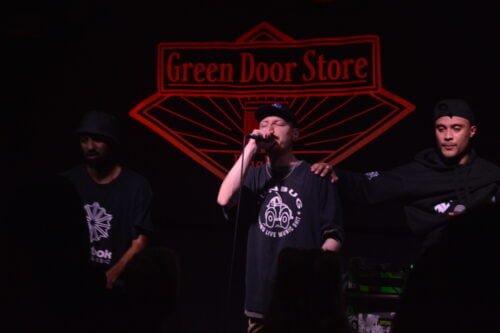
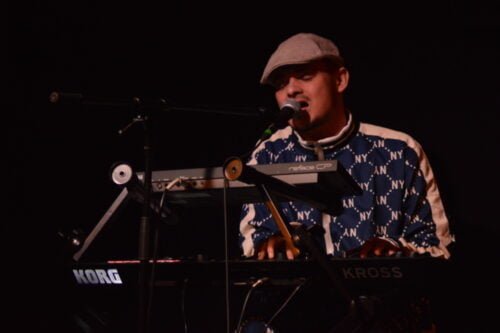
But first, please enjoy our short video of Room to Rant’s recent showcase gig.
What is Room to Rant?
Room to Rant is a collaborative project between Audio Active, a music charity which engages with young people, and YMCA DownsLink Group. Room to Rant is a group space for people who are male or identify as male, where people can drop in and write lyrics or freestyle. We also do a check in, and I’m there as a counsellor to offer professional guidance around signposting and safeguarding. And then if there’s a need for it, or people want to, they can have counselling with me one-on-one for 16 to 24 sessions.
Who is Room to Rant for?
Room to Rant is for 16- to 25-year-olds that identify as male. Generally, there’s two pathways: people that already rap and are into making music, such as participants from other parts of Audio Active, who realise they might need some added support; or sometimes people can just be referred in through colleges. They can come in for those reasons or sometimes it can be purely for the counselling part and then they can come to the group if they want to. It’s not all people that can make music either. We do have some people who initially started out just wanting to come and be in the space and through that experience they’ve learnt to get into the music part and given writing a try. And people that were more shy and not so confident or didn’t want to be rappers, still get benefit from it. It draws different kinds of people for different reasons.
What happens during a Room to Rant session?
It’s a drop in space so people can come and go as they please as there is no expectation to be there every week, which is quite unique. We’ll sometimes play each other music that we’re listening to at the moment, or lyrics that might have some meaning to us, such as how we might be feeling that week. Then they might do some freestyle rapping or show the sort of music that they’ve been working on. Next, we do a check in where we go around and talk about how our week’s been, how we’re feeling emotionally. And that’s the opportunity for me to gauge where people are at and ask if counselling would be something they’d like to do.
It’s very natural, me being in the group allows me to build a relationship with those young people as well, because generally the people that go there might have had counselling in school or been part of other interventions, but they may not have a great opinion of these or feel failed quite often. So, it’s just a different way to reengage with that process. And I think it works really well.
Why does this work so well?
I think because a lot of young people might have been signposted or suggested in school that they see a counsellor, but it’s not something they want to do and it’s just a nameless person behind a door that they see every week. Whereas in this project, I’m there every week, they get to know me and there’s that consistency and opportunity for them to realise that I like music as well.
I really like breaking the stigma of what people think counselling is. The way that I work as a person-centred counsellor is that it’s completely their time, so it’s up to them how they spend it. And sometimes I notice that there’s an expectation that they have to come with heavy stuff to talk to me about. But when they realise that’s not what they have to do, I find they relax into the process more and it’s not necessarily about digging up trauma from their past. They can just talk to me about their week or show me music or even write lyrics with me in the sessions. It’s a lot more relaxed.
How did you get involved with the project?
I was on the hunt for a new job and saw this one advertised and thought, wow, this is made for me. I have experience with music, I went to college and did music production, I’m a singer and can write songs, so it was combining two things that I had knowledge of. And I’m very familiar with Audio Active as a charity. I’ve grown up being involved in the music scene in Brighton, I already knew a lot of the people that work at Audio Active, so it seemed like the perfect fit.
And I legitimately like hip hop music. I think that’s also part of this process of maybe changing the young people’s opinions of a counsellor or even just being a female in a male dominated space. I think at times it’s challenging, but that also really helps them to have a positive relationship with a female in that world.
Why did Audio active start this project?
I think it was the baby of John Clarke who works at Audio Active. I think Room to Rant has been running in some capacity for four or five years previously with other counsellors. It’s grown and they got three years worth of funding from Red Nose Day which is now running out.
What do you find unique about Room to Rant?
Everything’s unique about it. The nature of it, and the fact that it’s a drop in space means it’s on the participants to make that commitment if they want to come every week. There’s clearly something they’re getting from the experience, whether it’s the group, the counselling, or if they just want to make music. There’s that freedom, but also that added level of care. I don’t think there’s many spaces for young men to say how they’re genuinely feeling and I think for them to witness that in the group is so important for them to be able to hear each other, because actually some of the most beautiful parts of the group experience is not us interjecting, it’s actually the young people giving each other advice or little pep talks or just a little pat on the back to say, it sounds like you’re going through a hard time. That means so much. It’s so powerful.
They take care of each other. I was working with someone 1-1, there was a lot of safeguarding and we ended up doing an internal review of why they hadn’t been picked up by other services. So initially that work with them was quite challenging because I was scared to break the relationship that we had in counselling. But once he saw the benefit of me doing that, he started doing that for one of the other people in the group. He called me and said that he was really worried about another person in the group. He shared their situation with me and asked me to do some safeguarding for him. Initially it might seem terrifying to ‘snitch’ because his friend told him not to tell anyone, but it actually really shows that community spirit, and him looking out for his friend because of the experience that we’d had together. That young person is actually now in counselling with me. Because he was like, OK, you’re looking out for me so I’ll take that risk to come and talk to you about what’s going on with me. I think them looking out for each other is the unique part of the group experience.
As you do both, please can you explain the difference between counselling and youth work?
Youth work is much more practical and hands on. For example, I’ve gone with people to the Youth Advice Centre, or to the police station for support. And then counselling is more listening, facilitating, empowering. I don’t give suggestions or tell somebody what they should or shouldn’t be doing, it’s more about us working collaboratively to build that relationship so they can make those choices for themselves. I do appreciate that it’s quite out there for a counsellor to be doing those two roles, but the young people seem to know the difference.
Initially it challenged me because it’s all about boundaries. But it crosses over because what we work with together in counselling then might cross over into me saying, OK, there’s a suggestion that you might want to go to the Youth Advice Centre to get some housing advice. And they’re like, yeah, but I don’t feel confident going and I can say, well, would you like me to come with you? And that gives them the confidence and support to do things that they wouldn’t do by themselves.
What has Room to Rant taught you?
It’s taught me so much. I think the main thing which probably seems obvious is that I believe in change more than ever. And maybe to look at things slightly differently. As a counsellor, I think I do this anyway, but to sometimes read between the lines of how someone may present to you, there’s often a lot more going on underneath the surface.
What would you like people to know about mental health in young men?
Again, not assuming that what you see on the outside is all there is to it. Sometimes being really upset can manifest or be shown as anger. But it’s just taking time, and to not be scared, to ask questions and actually sit with that. It might be uncomfortable to see somebody you know really angry or stressing out, but tackle that head on and reassure somebody that you’re there. There’s a lot of men struggling quietly and maybe they don’t realise that it’s OK to share how they’re feeling and that they don’t have to deal with it on their own or shut down, because it’s not the done thing or manly. I think that change comes from witnessing each other doing it and realising it’s actually alright for us to say that we’re not feeling great. There’s a lot of people struggling right now, and there’s a lot going on in the world that adds to that.
What are some of your proudest moments working in this project?
I might get emotional now! I think some of my proudest moments are working with people who wouldn’t have ever got involved in the process. There’s a young person that I’m still working with who I first met him, walked into a session completely intoxicated, with one shoe on and said he’d lost his bag. He knew the group was running and turned up in an awful state. One of the people took him out and tried to look for his bag. When they left, he tried to throw himself in front of a truck and ended up being in A&E to make sure that he was safe. Someone from Audio Active said he would really like to have counselling and asked if would work with him. I wasn’t 100% sure whether he was ready for the process.
The first times I met him in a cafe, he seemed OK, but was very vague and didn’t want to stay for very long. We then transferred these into one-on-one counselling together. He came to the session intoxicated and I had to say to him, you know, you’re intoxicated, which he argued with me about. I had to cut the session. But from then on, he understood the boundaries, and came back the week after and wasn’t intoxicated. We’ve been able to build a really great working relationship. He was homeless but is now housed. He used to cut the session short as he could only do about 20 minutes before feeling too uncomfortable, whereas now he’ll sit through the whole 50 minutes and won’t realise the session’s coming to an end. I’ve watched him progress so much and he gets so much from just being there every week, having an appointment that he keeps to. It’s a huge shift. And I’m not saying that everything in his life’s great, he’s still got his challenges. But even to commit to that process, which is something that he would never have done before, is amazing.

 Family mediation is an opportunity for members of a family (in any make up) to come together to talk about areas of conflict and/or when there has been a breakdown in communication. The space provided is neutral, safe, and confidential and the third-party (mediator) is impartial (doesn’t take sides) independent from any other services (including statutory) and is professionally trained.