Author: Debbie Watkins

  • Grant from Allchurches Trust brings chaplaincy to YMCA Guildford Foyer

    Grant from Allchurches Trust brings chaplaincy to YMCA Guildford Foyer

    We are delighted to have received a ‘Hope Beyond’ Covid grant from Allchurches Trust which has allowed us to set up chaplaincy sessions at our YMCA in Guildford. Our Guildford Foyer is a 24-hour supported accommodation for young people (16-24). We provide a safe home to 30 young people in Guildford every night and a significant proportion of these are unaccompanied asylum-seeking children.

    Elly McKay-Smith, our Eastbourne Chaplain will be leading chaplaincy in Guildford. Anyone who follows Elly on social media (@macsm) will know the amazing energy and heart she brings to her role as Chaplain.

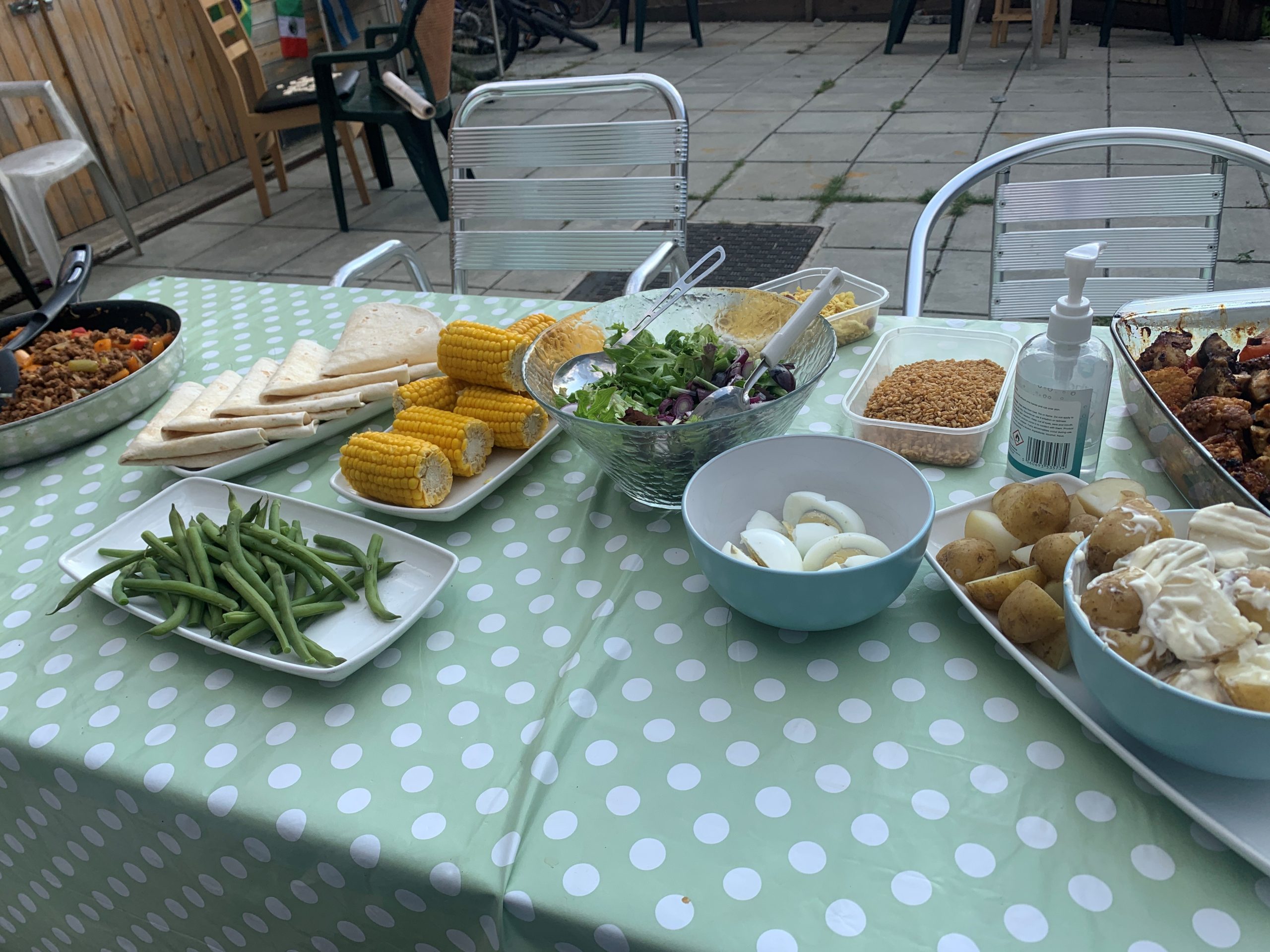
    Chaplaincy meal at Guildford Foyer

    Since starting she’s already been gardening with residents as well as leading healthy cooking sessions and sharing meals. 

    What a difference 4 weeks makes! (Tomatoes and vegetable plants at YMCA Guildford Foyer)


    Speaking about setting up chaplaincy in Guildford she said:  “It has been refreshing to work with such a variety of young people from such diverse backgrounds and find commonality through the love of cooking and sharing a meal together. We have even been planting a variety of different vegetables to use – squashes, aubergine, tomatoes, basil and mint included! 

    The role of our Chaplains is to spend time with the residents in their projects, cooking and eating with them, chatting, playing board games, and generally just being there for them.  They enable our young residents to feel heard, valued, and accepted as well as helping them to feel part of the wider community.

    Speaking about the difference chaplaincy made to him, one young resident said:

    It gave me the chance to talk to other people in a place I feel comfortable – rather than a random person in a place I don’t know. And thanks to the chaplaincy and the volunteers, I am where I am now.

    Click HERE to find out more about the chaplaincy team or how to volunteer.

    Youth Homelessness

    Every year we support over 10,000 children, young people and their families operating from our centres in Brighton & Hove, Eastbourne, Guildford, Mid Sussex, Hastings, Horsham, Crawley and Worthing. We are the biggest provider of youth services in the South East and work to tackle the root causes of youth homelessness. If you’d like to support our work to transform the lives of young people facing homelessness DONATE  HERE. Or, if you would like to offer longer-term support, consider becoming a ROOM SPONSOR and give a vulnerable young person in your community the chance of a brighter future.

  • Glossary of gender identity and sexuality for beginners

    Glossary of gender identity and sexuality for beginners

    This article is intended to give an overview of the difference between sex, gender and sexual orientation, for those who want to know more, but maybe feel embarrassed to ask, or, are confused by the different terms and identities. It is unashamedly ‘basic’, however at the end of the article are suggestions for more in-depth reading and resources.

    What does LGBTQU+ stand for?

    LGBTQU+ is the acronym we are using at YMCA DownsLink Group. You will see slightly different versions of this, sometimes without the U (‘unsure’) or with an I (intersex) or A (asexual). In its simplest form LGBTQU+ is an acronym for Lesbian, Gay, Bisexual, Transgender, Queer, Unsure with the + representing other people who do not wish to be classified in any specific way.

    Why ‘Queer’?

    In the past Queerhas been used as a derogatory term, particularly directed at lesbian and gay individuals. The term has now been reclaimed by the LGBTQU+ community (particularly young people) who don’t identify with Western categories around gender identity and sexual orientation, but, is still viewed to be derogatory by some. This has culminated in the addition of the Q to the term LGBTQ. But, due to it’s history, it’s important not to use the term unless you know that an individual self-identifies as that.

    Why does YMCA DownsLink Group use ‘U’?

    We’re using U which stands for ‘unsure’. After discussions with some of the young people we work with (LGBTQU+ Youth Advisory Board) & recommendations from Allsorts. Our young panel discussed the importance of communicating to other young people that it’s okay to be unsure about your gender or sexual identity, and that you can still access services if you are unsure. We believe that the inclusion of ‘U’ is crucial in our work to enable all young people to come forward for support and know that they will be accepted, however they are feeling.

    “There’s not much information if you’re unsure.”

    “There [should be] more resources available for people who aren’t necessarily sure about their sexuality or how they feel. More open-ended conversations, school and organisation resources, more acknowledgment”

    I agree [to use ‘U’] and think that maybe you shouldn’t have to define your sexuality if you don’t feel that you identify with a specific group”.

    Gender, it’s difference from Sex and other associated terms

    In basic terms sex (as a ‘noun’) refers to the biological differences; chromosomes, hormonal profiles, internal and external sex organs, especially as differentiated with reference to the reproductive functions and is categorised as generally male or female. It is assigned at birth.

    The UK government defines sex as:  Referring to the biological aspects of an individual as determined by their anatomy, which is produced by their chromosomes, hormones and their interactions. Generally male or female and something that is assigned at birth.

    Gender is not sex. Gender is an expression of one’s own concept of self, traditionally differentiated by masculinity and femininity and is most frequently assumed from the sex assigned at birth.

    The UK government defines gender as: Gender identity is a personal, internal perception of oneself and so the gender category someone identifies with may not match the sex they were assigned at birth.

    Unlike sex (noun), gender is largely a cultural construct and is lived (e.g. as identity, as expression, through social interaction), represented (e.g. in language, media, popular culture) and regulated (e.g. by socio-cultural norms, such as the stereotypes of ‘masculinity’ and ‘femininity’, and in law).

    Gender is increasingly understood as not binary but on a spectrum. Growing numbers of people are identifying as somewhere along a continuum between man and woman, or as non-gendered (neither man or woman). Therefore, they often have their own terms to describe themselves rather than using binary categories of male and female. While more people are identifying as non-binary, this is not a new concept and has existed for many years across different cultures around the world (see further reading).

    Sexual Orientation

    Sexual orientation is a person’s emotional, romantic and/or sexual attraction to another person.

    In the UK census of 2015, the majority (93.7%) of the UK population identified themselves as heterosexual or straight, with 1.7% identifying as Gay, Lesbian or Bisexual, the remainder either identifying as “other”, “don’t know” or refusing to respond.

    However, twice as many 16-24 years old (than older generations) identify as gay, lesbian or bisexual. As the social stigma around sexuality has reduced more and more young people are ‘coming out’ at a younger age.

    We work with many young people who are struggling with who they are. Issues around gender identity and/or sexuality can be a common cause of family tension and in some cases can be the reason a young person leaves home and potentially becomes homeless. Our Youth Advice Centres (YAC) offer tailored support for young people needing help and can direct them to other services or mediation and counselling. Read Nathan’s story to find out more.

    Glossary of Gender & Sexuality Terms and Definitions (A-Z)

    Ace 

    An umbrella term used specifically to describe experiences of a lack of, varying, or occasional experiences of sexual attraction. This encompasses asexual people as well as those who identify as demisexual and grey-sexual.

    Agender

    a non-binary identity for people that have no gender at all. This term also falls under the trans umbrella.

    Ally

    A (typically) straight and/or cis person who supports members of the LGBTQU+ community.

    Bi

    Bi is an umbrella term used to describe a romantic and/or sexual orientation towards more than one gender. Bi people may describe themselves using one or more of a wide variety of terms, including, but not limited to, bisexual, pan, queer, and some other non-monosexual and non-monoromantic identities.

    Biphobia

    The fear or dislike of someone who identifies as bi based on prejudice or negative attitudes, beliefs or views about bi people. Biphobic bullying may be targeted at people who are, or who are perceived to be, bi.

    ​Cisgender or Cis

    Someone whose gender identity is the same as the sex they were assigned at birth. Non-trans is also used by some people.

    ​Coming out

    When a person first tells someone/others about their orientation and/or gender identity.

    Deadnaming

    Calling someone by their birth name after they have changed their name. This term is often associated with trans people who have changed their name as part of their transition.

    Gay

    Refers to a man who has a romantic and/or sexual orientation towards men. Also a generic term for lesbian and gay sexuality – some women define themselves as gay rather than lesbian. Some non-binary people may also identify with this term.

    ​Gender

    Often expressed in terms of masculinity and femininity, gender is largely culturally determined and is assumed from the sex assigned at birth.

    ​Gender dysphoria

    Used to describe when a person experiences discomfort or distress because there is a mismatch between their sex assigned at birth and their gender identity.  This is also the clinical diagnosis for someone who doesn’t feel comfortable with the sex they were assigned at birth.

    ​Gender expression

    How a person chooses to outwardly express their gender, within the context of societal expectations of gender. A person who does not conform to societal expectations of gender may not, however, identify as trans.

    ​Gender identity

    A person’s innate sense of their own gender, whether male, female or something else (see non-binary below), which may or may not correspond to the sex assigned at birth.

    ​Gender reassignment

    Another way of describing a person’s transition. To undergo gender reassignment usually means to undergo some sort of medical intervention, but it can also mean changing names, pronouns, dressing differently and living in their self-identified gender.

    Gender reassignment is a characteristic that is protected by the Equality Act 2010, and it is further interpreted in the Equality Act 2010 approved code of practice. It is a term of much contention.

    Gender Recognition Certificate (GRC)

    This enables trans people to be legally recognised in their affirmed gender and to be issued with a new birth certificate. Not all trans people will apply for a GRC and you currently have to be over 18 to apply.

    You do not need a GRC to change your gender markers at work or to legally change your gender on other documents such as your passport.

    ​Gillick competence

    A term used in medical law to decide whether a child (under 16 years of age) is able to consent to their own medical treatment, without the need for parental permission or knowledge.

    Heterosexual/straight

    Refers to a man who has a romantic and/or sexual orientation towards women or to a woman who has a romantic and/or sexual orientation towards men.

    ​Homosexual

    This might be considered a more medical term used to describe someone who has a romantic and/or sexual orientation towards someone of the same gender. The term ‘gay’ is now more generally used.

    ​Homophobia

    The fear or dislike of someone, based on prejudice or negative attitudes, beliefs or views about lesbian, gay or bi people. Homophobic bullying may be targeted at people who are, or who are perceived to be, lesbian, gay or bi.

    Intersex

    Intersex is not a gender identity and should not be lumped under the trans umbrella. It describes someone born with anatomical, hormonal and/or chromosomal variations in their sex characteristics. Some intersex people self-define as trans and/or non-binary, others with the gender they were assigned at birth.

    It’s always up to an individual as to how they describe their gender identity. Some people use multiple terms or shift between different terms to better represent their gender identity. This should always be respected and supported.​

    Lesbian

    Refers to a woman who has a romantic and/or sexual orientation towards women. Some non-binary people may also identify with this term.

    ​Lesbophobia

    The fear or dislike of someone because they are or are perceived to be a lesbian.​

    LGBTQU+

    The acronym for lesbian, gay, bi, trans, queer, unsure.

    ​Non-binary

    An umbrella term for people whose gender identity doesn’t sit comfortably with ‘man’ or ‘woman’. Non-binary identities are varied and can include people who identify with some aspects of binary identities, while others reject them entirely.

    Orientation

    Orientation is an umbrella term describing a person’s attraction to other people. This attraction may be sexual (sexual orientation) and/or romantic (romantic orientation). These terms refers to a person’s sense of identity based on their attractions, or lack thereof.

    Orientations include, but are not limited to, lesbian, gay, bi, ace and straight.

    ​Outed

    When a lesbian, gay, bi or trans person’s sexual orientation or gender identity is disclosed to someone else without their consent.

    Person with a trans history

    Someone who identifies as male or female or a man or woman, but was assigned the opposite sex at birth. This is increasingly used by people to acknowledge a trans past.

    ​Pan

    Refers to a person whose romantic and/or sexual attraction towards others is not limited by sex or gender.

    ​Passing

    If someone is regarded, at a glance, to be a cisgender man or cisgender woman.

    Cisgender refers to someone whose gender identity matches the sex they were ‘assigned’ at birth. This might include physical gender cues (hair or clothing) and/or behaviour which is historically or culturally associated with a particular gender.

    ​Pronoun

    Words we use to refer to people’s gender in conversation – for example, ‘he’ or ‘she’. Some people may prefer others to refer to them in gender neutral language and use pronouns such as they/their and ze/zir.

    Queer

    Queer is a term used by those wanting to reject specific labels of romantic orientation, sexual orientation and/or gender identity. It can also be a way of rejecting the perceived norms of the LGBT community (racism, sizeism, ableism etc). Although some LGBT people view the word as a slur, it was reclaimed in the late 80s by the queer community who have embraced it.

    ​Questioning

    The process of exploring your own sexual orientation and/or gender identity.

    Romantic orientation

    A person’s romantic attraction to other people, or lack thereof. Along with sexual orientation, this forms a person’s orientation identity.

    Sex

    Assigned to a person on the basis of primary sex characteristics (genitalia) and reproductive functions. Sometimes the terms ‘sex’ and ‘gender’ are interchanged to mean ‘male’ or ‘female’.

    ​Sexual orientation

    A person’s sexual attraction to other people, or lack thereof. Along with romantic orientation, this forms a person’s orientation identity.

    Trans

    An umbrella term to describe people whose gender is not the same as, or does not sit comfortably with, the sex they were assigned at birth.

    Trans people may describe themselves using one or more of a wide variety of terms, including (but not limited to) transgender, transsexual, gender-queer (GQ), gender-fluid, non-binary, gender-variant, crossdresser, genderless, agender, nongender, third gender, bi-gender, trans man, trans woman,trans masculine, trans feminine and neutrois.

    ​Transgender man

    A term used to describe someone who is assigned female at birth but identifies and lives as a man. This may be shortened to trans man, or FTM, an abbreviation for female-to-male.

    Transgender woman

    A term used to describe someone who is assigned male at birth but identifies and lives as a woman. This may be shortened to trans woman, or MTF, an abbreviation for male-to-female.

    ​​Transitioning

    The steps a trans person may take to live in the gender with which they identify. Each person’s transition will involve different things. For some this involves medical intervention, such as hormone therapy and surgeries, but not all trans people want or are able to have this.

    Transitioning also might involve things such as telling friends and family, dressing differently and changing official documents.

    ​Transphobia

    The fear or dislike of someone based on the fact they are trans, including denying their gender identity or refusing to accept it. Transphobia may be targeted at people who are, or who are perceived to be, trans.

    ​Transsexual

    This was used in the past as a more medical term (similarly to homosexual) to refer to someone whose gender is not the same as, or does not sit comfortably with, the sex they were assigned at birth.  This term is still used by some although many people prefer the term trans or transgender.​

    ——–

    To find out more and go into the subject in more depth, see this reading suggestions below:

    Further reading:

    • Stonewall is a leading lesbian, gay, bisexual and transgender rights charity full of useful information and campaigns.
    • UK Trans Info has a dedicated section of their website for schools, including best practice guidelines, legal guidance and information for dealing with transphobic bullying.
    • Mermaids work to raise awareness about gender nonconformity in children and young people. They provide resources and information as a reference point for professionals supporting a gender non-conforming or transgender young person.
    • New York Times – Useful articles on LGBTQ+ language and terminology
    • Allsorts, youth charity for LGBTQU+ full of useful information and resources
    • Big Talk Education – age-appropriate resources for primary aged children, parents and teachers
    • Comprehensive list of LGBTQUIA+ terms

     

  • New adult digital mental health service: e-wellbeing for adults

    New adult digital mental health service: e-wellbeing for adults

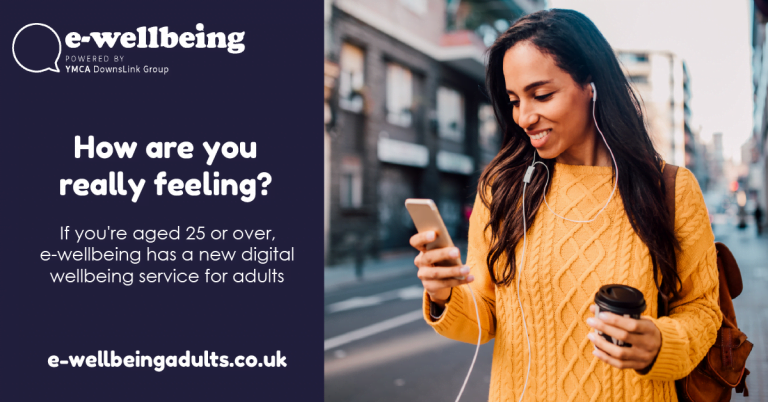
    Mental Health is just as important as physical health and there is no age barrier to experiencing mental health challenges. This year, perhaps more than any other, we’ve all faced circumstances which have tested both our ability, and our understanding, of how to manage our own mental health. For many the pressure and anxiety created by COVID-19 has exacerbated underlying issues. Following on from the success of our e-wellbeing digital platform, aimed at young people, we’re extending the reach of our online digital mental health service and have launched e-wellbeing for adults a resource for adults of any age.

    Marketing campaign e-wellbeing

    e-wellbeing for adults is an NHS approved digital wellbeing service, and it provides advice, support and a clear pathway to local services in Sussex for any person in need of mental health support.  We are one of the South East’s biggest providers of counselling services (YMCA Dialogue), and we received funding from Sussex Partnership NHS Foundation Trust to develop this new digital mental health platform so that adults across Sussex can access the help they need.

    The pandemic has impacted everyone’s mental health. As we transition into a ‘new normal’ and adjust to a new way of working, studying and interacting with family and friends, mental health has never been more important than it is now. Statistics* show that a staggering 1 in 4 people experience mental health issues each year and it is estimated that at any given time, 1 in 6 working-age adults have symptoms associated with mental ill health. This mental health epidemic isn’t just at a personal cost to an individual’s wellbeing, but is responsible for 72 million working days lost every year.

    e-wellbeing for adults is different to other websites, in that it poses a series of questions to help guide adults of all ages to the appropriate content. It provides them with self-help guidance and information about different aspects of mental health difficulties and supports them to make the decision about whether they may need help from a professional service. Crucially, they will then be connected with information about services in their local area. It should also ensure higher rates of appropriate referrals to existing mental health services, and, in doing, should reduce pressure on frontline services, including GP surgeries and A&E.

    Speaking about the launch of the new service, Nicola Harvey YMCA DownsLink Group Digital and Engagement Lead said:

    “We’re delighted to be extending our e-wellbeing service to all adults, as its testament to the success of e-wellbeing for young people. Although we knew that young people would be confident and comfortable using digital platforms, the pandemic has shown that adults of all ages, including retirees, are much more digitally connected than ever before. Being able to access help and support online can also help people overcome their reticence at opening up about their concerns around their mental health. It can be a great way for them to come to terms with how they are feeling and prompt them to seek further help if they need it.”

    Commenting on the launch of the new website, Dr Rick Fraser, Chief Medical Officer at Sussex Partnership NHS Foundation Trust, which provides specialist mental health services to people of all ages in Sussex, said:

    “We are delighted to have had so much involvement in the development of this new website. The strain that the Covid-19 pandemic has put on the mental health of our community is something we are aware of every day. This fantastic self-help resource will help provide information and signpost to a range of services to ensure people seek help and guidance to manage their mental health in the most effective way. The content on the website has been put together by Sussex Partnership clinicians, our own Experts by Experience and other partner organisations and made with the best interests of the community at heart. I’m confident it will help those who are struggling to open up, seek advice and have that first conversation about how they are feeling.”

    For more information or to access the new digital platform visit www.e-wellbeingadults.co.uk

  • Advantaged Thinking for Young People Experiencing Homelessness

    Advantaged Thinking for Young People Experiencing Homelessness

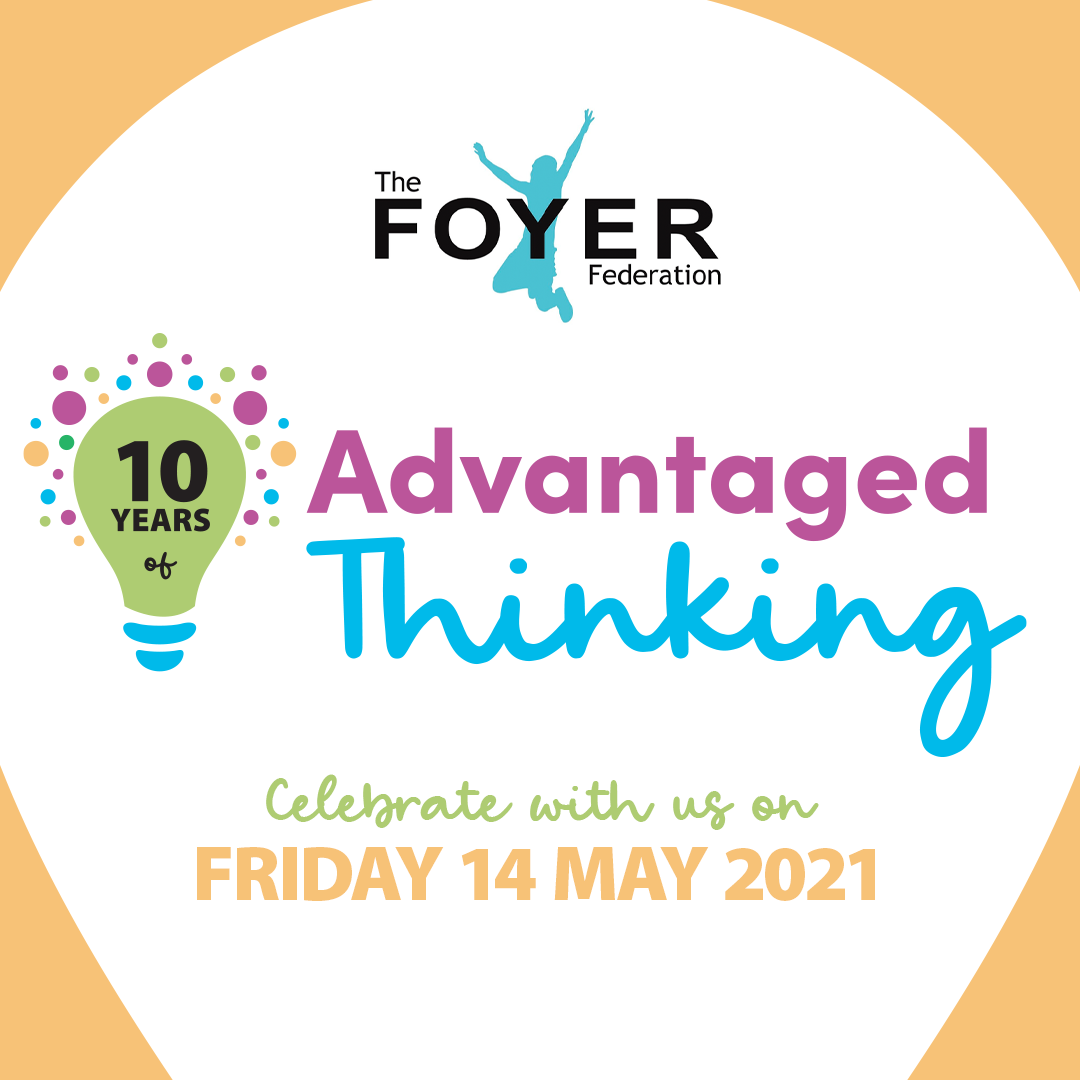
    Today (14 May 2021), the Foyer Federation, of which YMCA DownsLink Group is a member, is celebrating 10 years of Advantaged Thinking: its an influential philosophy that empowers young people who can’t live at home to thrive, not just survive. It’s a philosophy that fits closely with our own values of ensuring that everyone can, ‘belong, contribute and thrive’.

    Advantaged Thinking focuses on an individual’s strengths, rather than their weaknesses or what they need to overcome. It doesn’t define people by their problems but instead focuses on their dreams and aspirations and invests in their potential.

    10 years ago, Colin Falconer (then Director of Innovation at the Foyer Federation, now Director of InspireChilli) introduced Advantaged Thinking to the world on the TEDx stage. It has since become central to all the Foyer Federation does, including developing the first quality assurance accreditation for supported housing, national programmes for health and employability, and building young people’s leadership skills.

    Advantaged Thinking now underpins our approach to the provision of supported housing and how we work with young people: We believe that young people who have experienced homelessness are among the most resilient of their generation. They have talent to build on, experiences to draw on and the energy to spark change. We aim to put Advantaged Thinking at the heart of our work, so that every day we strive to ensure our young people aspire to, and believe in, the future they want.

    What is Advantaged Thinking in practice?

    Advantaged Thinking is an asset-based philosophy. It shapes everything we say and do. Advantaged Thinking promotes people’s strengths rather than defining them by their deficits. It understands that working towards people’s aspirations and dreams is just as important as meeting their immediate needs. An Advantaged Thinking approach is one that creates sustainable solutions and practices, building for the future as well as the here and now. It invests smartly in people’s potential.

    Seven Tests of Advantaged Thinking

    Advantaged Thinking is underpinned by seven ‘tests’, which define what success looks like for a community, organisation or service:

    1. Talk. Do you choose positive language when talking about people and avoid pigeon-holing and stereotypes?
    2. Understand. Do you always try to learn about someone’s strengths over their weaknesses?
    3. Work. Do you look beyond problems and deficits to develop new ideas and build on a person’s strengths and best qualities?
    4. Invest. Do you focus resources on enabling young people to thrive as well as helping them to cope?
    5. Believe. Do you dream as big for young people experiencing homelessness as you do for your own family?
    6. Involve. Do you put young people at the centre of their solutions and use their own experiences to empower them?
    7. Challenge. Do you actively campaign for Advantaged Thinking and hold disadvantaged thinking to account?

    Joel Lewis, Chief Executive of the Foyer Federation, said: “I am thrilled that 10 years after Advantaged Thinking was introduced by the Foyer Federation ,we can celebrate the impact it has had on the lives of countless young people and practitioners in the youth sector and beyond! I have personally drawn on Advantaged Thinking to create meaningful programmes, services and projects that ensure young people have the best opportunity to thrive. Being an Advantaged Thinker takes bravery, humility and energy. Over the last 10 years it is clear that it has struck a chord with so many who are desperate to see services, systems and people working together to build a positive present and an inspirational future for all young people.”

    Chas Walker, our CEO said: “Using Advantaged Thinking in the delivery of our supported housing projects really encapsulates the Foyer model and the way we want to work with, and support young people.  At our projects young people are given the opportunity to excel through the Advantaged Thinking approach, enabling them to thrive – and not just survive. We deliver this through our More Than a Room programme. But, we’re aiming to put Advantaged Thinking at the heart of our work with all young people, but it is still a work in progress and there is much more we can do.  We want to embed the approach across all of our youth services and we are starting to use the 7 Advantaged Thinking tests to assess, measure and reflect, to enable continuous improvement and ensure our services are fit for purpose and enable young people to realise their potential.”

    For more information about our More Than a Room programme click here or to find out more about the Foyer Federation’s work click here.

    Youth Homelessness

    Every year we support over 10,000 children, young people and their families operating from our centres in Brighton & Hove, Eastbourne, Guildford, Mid Sussex, Hastings, Horsham, Crawley and Worthing. We are the biggest provider of youth services in the South East and work to tackle the root causes of youth homelessness. If you’d like to support our work to transform the lives of young people facing homelessness DONATE  HERE. Or, if you would like to offer longer-term support, consider becoming a ROOM SPONSOR and give a vulnerable young person in your community the chance of a brighter future.

  • WiSE Up to Criminal Exploitation of Young People in Brighton & Hove

    WiSE Up to Criminal Exploitation of Young People in Brighton & Hove

    Have you ever thought about how drugs arrive in and move around Brighton?  Did you know that children are used by organised crime groups to transport, store and distribute drugs and the profits of drugs, within Brighton and Hove, and across the country? This activity, known as ‘Child Criminal Exploitation (CCE)’ has increased markedly over the last 2 years and  Brighton is the top target of county lines dealers according to a new report from London City Hall,  with vulnerable children as young as 10 being targeted.  We are launching a new campaign, WiSE Up To Exploitation, through our WiSE project which leads on both child sexual exploitation and criminal exploitation, to raise awareness of the issue.

    The social media campaign, WiSE Up to Exploitation has been devised by our WiSE project workers, alongside a group of Brighton University student volunteers. It aims to raise awareness among fellow students and the wider community of child criminal exploitation and its links to the sale and distribution of drugs in Brighton and Hove. The campaign hopes to start conversations about recreational drug use in Brighton and Hove and the impact on children and young people who are exploited through this process.

    Speaking about why she wanted to be involved, volunteer Genevieve Orsi said:

    “I think many of my peers have no idea that children in Brighton and Hove are being abused in this way and I want to make sure as many people as possible know that this is happening.”

    YMCA WiSE, project worker Magdalene Mill explains more about child criminal exploitation:

    “Child criminal exploitation is a type of abuse where children are targeted, often through social media platforms such as snap chat and Instagram, they are then groomed and coerced into committing criminal acts. On the surface it may appear that children who are criminally exploited have made a freely given choice, however, among other tactics, Intimidation, violence, sexual violence, debt bondage and weapons have been used to manipulate them to commit crimes.”

    Local Hove MP, Peter Kyle, who is also Shadow Minister for Victims and Youth Justice, is backing the campaign. He goes on to explain:

    “Consuming illicit drugs isn’t a pain-free choice. When someone orders their fix, they set off a chain of processes with exploitation at its heart. Young people from all across the country are coerced to travel long distances, putting themselves in mortal danger and held in modern slavery to exploitative drug gangs. These gangs hold vulnerable young people in debt bondage, often threatening to injure or kill loved ones unless the victims do as they say.

    “Tackling child criminal exploitation is at the heart of my ambitions as MP for Hove, and Labour’s Shadow Minister for Victims and Youth Justice. That’s why I’m so pleased to support YMCA WiSE’s campaign to raise awareness of child criminal exploitation in Brighton and Hove. We are a top target for county lines dealers across the UK – now it’s time to fight back.”

    To find out what you can do to help or how to spot the signs that someone you know may be being exploited, visit https://staging.ymcadlg.org/wise-up-to-exploitation/ and follow @ymcawise on all social media platforms. You can also follow the work of YMCA DownsLink Group by following @ymcadlg on all social media channels.

    Support our work with young people; child criminal exploitation and tackling youth homelessness

    If you’d like to support our work to transform the lives of young people facing homelessness or at risk of child criminal exploitation DONATE  HERE. Or, if you would like to offer longer-term support, consider becoming a ROOM SPONSOR and give a vulnerable young person in your community the chance of a brighter future.

  • What is Chaplaincy at YMCA DownsLink Group? How does it make a difference?

    What is Chaplaincy at YMCA DownsLink Group? How does it make a difference?

    What does Chaplaincy really mean to the young people we support? One of our residents who has recently ‘moved on’ to a transitional property out of a YMCA Foyer, had this to say about Chaplaincy:

    “Without Chaplaincy, it would have taken me much longer to find the confidence to speak to others.
    When I first moved to the Foyer I didn’t speak to anyone for the first 2 weeks. I don’t know why, but Chaplaincy seemed like a safe place to introduce myself. I didn’t, and don’t see Chaplaincy as anything to do with the Foyer, not related, but more of an outside group, with people to talk to outside of the YMCA (to clarify, key worker/support staff), and with people who are the same age as me in similar positions – the other residents who attend Chaplaincy.

    Chaplaincy was a space where I felt comfortable, it helped me with my ability to talk to strangers, a place where I could get things off my mind and chest, every week, and gain outside views, different points of view, and outside advice – including from the other young people attending Chaplaincy, who then became my friends.

    I think I would still be there, in the same room, not talking to anyone, if not for Chaplaincy, but here I am in a move on property now. Also, the walks during lockdown (with the Chaplain) have really helped. It’s been good, really helped to meet with someone who is not a key worker to get another view, someone to talk to about problems, family, anything. It’s meant I’ve got a bit of fresh air when I would normally just sit in my room, an hour of clearing my head, getting exercise, which is good for me.

    It gave me the chance to talk to other people in a place I feel comfortable – rather than a random person in a place I don’t know. And thanks to the Chaplaincy and the volunteers, I am where I am now.”

    If you would like to find out more about the work of Chaplaincy or are interested in volunteering click here.