Author: Debbie Watkins

  • Supporting young people through grief and loss

    Supporting young people through grief and loss

    Losing a loved one can be difficult and due to the Coronavirus pandemic, many of the young people we support may have experienced this recently. Coping with grief and loss can be one of the most difficult experiences anyone will have and for young people can be particularly difficult.

    Focused on all things mental health, e-wellbeing is our NHS approved digital wellbeing service for young people. We provide tips, advice and support during lockdown and beyond, so young people can access the right tools for their emotional health and mental wellbeing.

    While grief is something that we all go through at some point in life, it is different for everyone. A young person who is grieving during lockdown may be worried that how they feel isn’t the ‘right’ way to grieve or even be struggling with not being able to see or say goodbye to their loved one due to social distancing rules. There is no ‘one size fits all’ when it comes to grief.  e-wellbeing’s new module on Grief has been co-created with young people and senior therapists to provide compassionate support, advice and coping tools to help young people going through grief or who may be supporting someone else who has experienced loss. Within this module, we also signpost to Winston’s Wish – an organisation which specialises in supporting bereaved children, young people and their families.

    Watch this short video from Charlotte, Humanistic Counsellor and Content Creator at e-wellbeing:

    Click here to be taken to e-wellbeing’s new module on Grief.

    For further information on our e-wellbeing website and our range of mental health resources for children and young people, visit www.e-wellbeing.co.uk.

  • YMCA England & Wales launch campaign to tackle youth homelessness

    YMCA England & Wales launch campaign to tackle youth homelessness

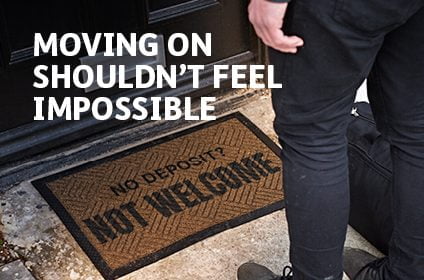
    We’re backing YMCA England & Wales’ latest campaign to encourage the government to tackle the issues around affordable housing for young people. Whilst it is difficult for many young people to access housing, it can be impossible for those already in supported accommodation.  YMCA’s latest research into young people’s experiences of moving out of homelessness and into independent living has found that 70% were ready to move on but remained in supported accommodation. Of those ready to move, only one in four felt that they would be able to do so within the next three months.

    During a time of unprecedented crisis and intervention, providing beds in hotels for rough sleepers has rightly been a priority for the Government. However, across the country young people who feel ready to leave supported accommodation, and ultimately free up this much needed space, are unable to do so due to overwhelming financial and social barriers.  Findings from YMCA’s longitudinal research into the experiences of young homeless people discovered that an inability to save, lack of affordable housing and discrimination in the private rental sector were the main reasons given for why they were unable to move on from homelessness.

    Most young people in supported housing rely on welfare benefits to cover the cost of rent and everyday living, leaving little or no money to put aside towards deposits and upfront costs associated with private renting. When asked what aspect had most significantly impacted their ability to move on, 49% of young people cited not having enough money saved. And the picture isn’t much different for those in employment, as starting work often goes hand-in-hand with piling debt as benefits are stripped. Almost all of the young people YMCA spoke to reported getting into debt after starting work due to the immediate removal of Housing Benefit or Universal Credit, despite a delay in receiving salary.

    For those who are able to pull together savings, private renting is not only unaffordable, but unstable. Private landlords can be reluctant to take on young people as tenants, often requiring guarantors and additional checks which can be incredibly difficult for those in supported housing. This bias is being felt by young people, as 41% told YMCA that landlords being unwilling to let to them was the main aspect preventing them from moving on, topped only by the cost of rent and deposits at 44%.

     Our CEO, Chas Walker, said:

    “Across Sussex and Surrey we are seeing an increase in youth homelessness. In Brighton & Hove we have one of the lowest levels of social housing in the UK, coupled with a large private rental sector. This makes it very difficult for young people to access or afford housing locally.  Supported housing is designed to be a temporary aid for young people to settle and have a helping hand to get their lives on track. However, many young people are forced to stay for months or even years after they feel ready to move on due to the barriers and blockades of the welfare system and outlook of our society.   

     With personal, financial and social obstacles piled in front of them, homeless young people need a welfare system which is designed to support them not hold them back. If the Government continues to ignore the faults within the system, they risk trapping young people in an endless cycle of homelessness, ultimately becoming stuck, disheartened and further isolated by the insurmountable challenges they face.”

    The Government can help young people progress to independent living by increasing the amount of benefits received while trying to move on from supported accommodation. For those in employment, they should be allowed to retain more of what they earn as they start to increase their hours, thereby providing a hand up in moving on.

    YMCA DownsLink Group is asking the public to show their support in bringing this to the attention of Government by signing this petition. Together we can help young people to take the next step into independent living, enabling them to reach their full potential and put their stamp on the world.

  • Tackling youth homelessness: YMCA DownsLink Group transforming young lives in your community

    Tackling youth homelessness: YMCA DownsLink Group transforming young lives in your community

    “Just walking through the doors of the YMCA and seeing the staff and the residents and having banter with them and talking to them.  It’s just like having a home away from home and having a sense of family. I think you can’t really put a price on that…”

    YMCA DownsLink Group is a charity working across Sussex and Surrey to support young people who are homeless or at risk of becoming homeless. We work hard to provide young people with a safe place to live, and, more than this, the skills and support they need to ensure they can maintain this and never have to return to a life on the streets.

    We also work to tackle the root causes of youth homelessness.  In order to break the cycle of homelessness, we provide holistic support for young people through; supported accommodation, training, learning, support & advice, counselling and mediation, giving them hope for a positive future.

    “Without support from YMCA Youth Advice Centre I would have been lost and wouldn’t have known where to turn. They helped me during a very emotional and difficult time for me, when I was finding it hard to think straight and had nowhere else to turn. I now have a safe place to live thanks to their excellent help and support.”

    Every night we provide a safe home to 763 young people in Sussex and Surrey


    The impact of Covid-19 on vulnerable young people and those at risk of homelessness

    Homelessness, mental health issues, family breakdown and unemployment/financial issues have always been factors impacting the lives of the vulnerable young people in our communities.  Covid-19 has hugely exacerbated these issues.  After an initial 61% increase in presentations of homelessness, we are now seeing a continued 20% increase in the numbers of young people who are reaching out for support, as well as an increase in the complexity of issues they are presenting to us.

    Right now, young people are coming to us with an increased threat of homelessness as relationships at home break down.  Those already in contact with us are experiencing heightened feelings of isolation, anxiety and fear.  They need our help now more than ever so that we can help them see the possibility of a safe and positive future and support them in their journey to get there.

    The rise of youth homelessness

    When it comes to youth homelessness, the statistics* speak for themselves:

    • It is estimated that 20% of homeless people are aged 16 to 24.
    • Approximately 40% of 16-25 year olds in the UK have sofa-surfed at some point due to having nowhere to live.
    • One in ten young people who have sofa-surfed did so for more than a month in total.

    We know that rough sleeping is a significant challenge in our area, with some of the highest numbers for rough sleeping outside of London. Significant changes to housing benefit, alongside the staggering rise in house prices and rents, means homes, particularly in the South East, are increasingly unaffordable. Since the start of the pandemic, job losses have particularly affected young people who are more likely to be in insecure employment or working in the gig economy.

    In addition,  many of the young people sleeping rough in our area have multiple and compound needs. This means that they may experience several overlapping problems at the same time, such as mental ill health, homelessness, drug and alcohol addiction, exploitation, offending and family breakdown. This group of people require greater levels of support to find a route off the streets and can struggle to engage with the services they need to get help.

    As well as the homeless young people we see on the streets, there are also those we don’t see – the hidden homeless.  These are the young people who are sofa-surfing or finding temporary accommodation with family and friends, and therefore not present in the statistics shared around homelessness.  Some stay with strangers and may be exploited, having to exchange sex for somewhere to stay.

    Care leavers are at a higher risk of youth homelessness

    A group of young people who are particularly at risk of homelessness are care leavers. They often have little choice but to deal with the challenges and responsibilities of living independently at a young age. For some, traumatic experiences in their early years can make them especially vulnerable. Almost 30% of the young people living in our supported housing fall into this category. We provide a vital stepping stone for those young people who aren’t ready to live alone. As well as a safe place to live, our ‘More Than a Room’ programme aims to develop ‘resilience’ in our young residents, so, however difficult their start in life, they can go on and live successful, independent lives.

    Breaking the cycle of youth homelessness – our approach

    Homelessness often becomes a cycle, linked with a lack of employment, education and training opportunities.  Recent statistics show that there were 771,000 young people (aged 16 to 24 years) in the UK who were not in education, employment or training (NEET) between January and March 2020.  This is an increase of 6,000 compared to the same period of 2019 – and this is only the young people we know about.  There are many more who are missed by these surveys, especially those who are homeless.

    These combined issues affect the young people living with us and mean that conventional learning programmes with rigid dates, limited options and schedules often do not work for them. Many courses do not consider the additional challenges in their life that may prevent them from adapting positively to a ‘standard’ learning environment.  As well as this, there’s no provision for young people to have a dream, or aspirations of where they want to be.  The focus is on getting people into a job – any job – as quickly as possible.  Funding means that opportunities are given to those who seem most likely to succeed and stay in work, which means that those in supported housing are often side-lined as they are perceived to be less reliable.

    We believe that ending homelessness needs to be about more than providing accommodation.  It’s about providing people with the holistic support and advice they need to prevent them from becoming homeless or returning to the streets. This is why we run a range of programmes, from basic life skills (More Than a Room) to education, training (Employability) and mentoring (Positive Placements) to ensure that our residents are given those skills and opportunities.  However, our programmes are not simply about learning skills, securing qualifications, or employment; they are also about building trust, self-esteem and confidence.  The young people we work with are often lacking a trusted adult role model in their lives, so the relationship they form with their Project Worker, Skills Advisor or Positive Placements mentor is key to learning how to build safe and secure relationships.  The difference we make is clear; in 2020, over 78% of the young people living in our supported accommodation moved on positively to independent living.

    Projects run by YMCA DownsLink Group to tackle youth homelessness

    • We provide a range of supported accommodation throughout Sussex and Guildford (Brighton&Hove, Crawley, Eastbourne, Guildford, Horsham, Mid Sussex, Hastings) from 24-hour support for those with the most complex needs, through to ‘move-on’ accommodation for young people who have successfully completed our training and skills programme and are ready to embark upon independent living.

    “When I’m here I can come down, I can talk to anyone when I need to if I need the help or I just need someone to talk to then they’re here.  There’s always the support round here, no matter what you’ve got on your mind.”

    • Our Youth Advice Centres (YAC) deliver a one-stop shop for young people to provide them with advice, intervention and sign-posting on a range of issues, such as housing, benefits, mental health support, work & training, sexual abuse and family relationship problems. Last year the YAC in Brighton & Hove alone supported 1,700 young people and their parents/carers. Our staff triage each situation individually and recommend a pathway of next steps to follow to get the help they need to find safe and secure accommodation.
    • Through YAC we provide a Family Mediation Service for young people aged 14 to 25. The purpose of family mediation is to try and support families to stay together where this can be done in a healthy and supportive way.  If this is not possible, then the young person is supported into alternative accommodation.  Last year our family mediation service enabled 71% of the families they saw to stay together, therefore reducing instances of homelessness.
    • More Than a Room: Practical skill sessions led by project workers within supported accommodation to equip young people with everyday skills they will need to live independently (budgeting, life ‘admin’, cooking, cleaning etc).
    • Employability Programme: Once we have addressed the immediate crisis needs of young people who come to us, we work with them to create a plan for their future via our education, skills and training programme and skills advisors. Our approach is to be led by the young person to help them find a path that is genuinely suitable and sustainable for them.
    • Positive Placements is our mentoring scheme. We pair young people with a volunteer who can support them to explore potential careers paths, get work experience or access the appropriate training.

    “From the beginning I was shy about it but now I am able to comfortably sit down and have long chats about anything really. My mentor has helped me to build my CV up and to have more confidence in myself. He takes an interest in anything I say and has helped me to organise my life”

    What impact does the work of YMCA DownsLink Group have?


    We are the biggest provider of youth support services in the South East. Our projects and services provide homes for young people at risk of homelessness as well as a range of preventative services that are so vital to vulnerable young people in our communities. Our services give hope to young people in crisis, and, the chance to get onto a path towards a brighter, independent future.

    “From where I’ve been and where I’ve come today, I’m quite proud of it to be honest.”

    In 2019/20:

    • 10,800 young people accessed our services
    • 763 homeless young people provided with safe accommodation every night
    • 62% of young people living with us were enabled to engage with education, employment or training opportunities
    • 500 young people were given support and advice via our Skills Advisors
    • 77 young people were mentored through our Positive Placements scheme
    • 3,142 children, young people & families were supported by our counselling service (YMCA Dialogue)
    • 1,700 young people and their parents/carers in crisis were provided with support and advice through our Youth Advice Centres
    •  71% of the families who were seen by the Family Mediation Service were helped to stay together, therefore reducing homelessness
    • 4,598 children and young people were reached through our youth work programmes
    • 78% of young people living in supported accommodation moved on successfully into independent living
    • 20% increase in the numbers of young people reaching out for support

    78% of our young people moved on positively from our accommodation to independence


    “I’d like to work in a care home looking after young people who have had difficulties.  I’d like to give something back because I know how hard it is.  I’ve been there and I’m so glad my bad days are over.  But other people’s aren’t…”

    Support our work tackling youth homelessness in your community


    As a charity, we rely on the support of our community to help fund our services and help us tackle the root causes of youth homelessness. If you would like to be involved why not consider joining our Room Sponsorship circle. Find out more HERE.


    *Centrepoint Databank Information
  • Eco Warriors at YMCA Crawley Foyer

    Eco Warriors at YMCA Crawley Foyer

    At YMCA DownsLink Group we are always looking for ways to reduce waste and recycle and lower our impact on the environment. Our team at YMCA Crawley Foyer set the Ground Maintenance Team a challenge to enable their residents to get busy in the garden this spring – a perfect antidote to the lockdown blues!

    Our Crawley team take up the story:

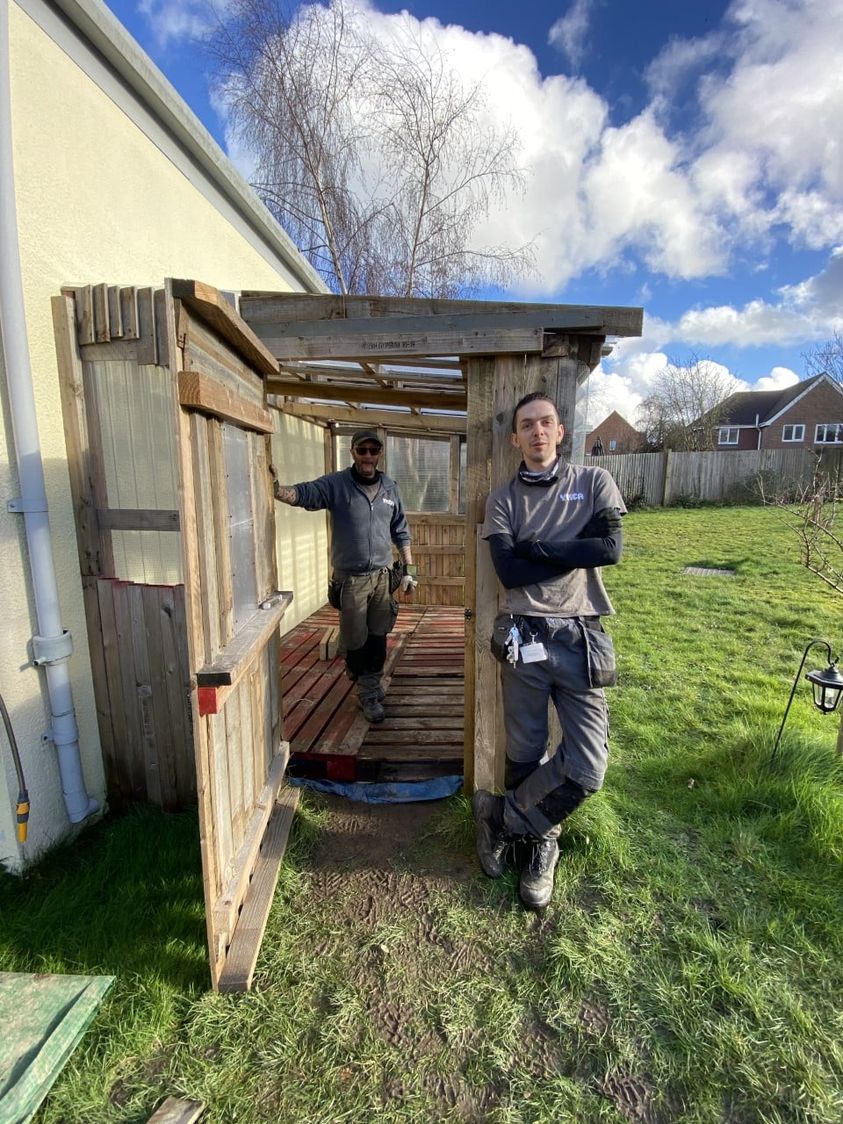
    “After seeing the amazing work that our maintenance team they had done making desks and bread boards out of unused pallets, reusing materials that would have otherwise been thrown away, we set them the “simple” challenge of building a greenhouse utilising old unused pallets and the least amount of money.

    At Crawley Foyer we have a small allotment box where each year we attempt and succeed to grow vegetables throughout the summer. Last year we were donated hundreds of seeds so what better way than to grow your own – a perfect More Than A Room session with the residents to encourage and inspire them to become more aware of their environment. And from this the idea sprung – what about a greenhouse?

    Al and Jamie (our amazing maintenance team) sprang into action and over the last couple of months in their spare time they have come up with this magnificent structure all costing around £90. All that we need now is the old reusable carpet and we are raring to go.

    You will see from the pictures below how our attractive looking feature will blend into the large garden seamlessly. Timber is also the most effective choice: a natural thermal insulator and it enables it to maintain a constant temperature when growing our seeds.

    We can’t wait to see what the residents grow in this later in the year.”

    Pop back in a few months to see how the residents are getting on and whether any of them have developed ‘green fingers’. We certainly hope so.

  • Children’s Mental Health Week Feb 2021

    Children’s Mental Health Week Feb 2021

    This week (1-7 February), is Children’s Mental Health Week – a week shining a spotlight on the importance of children and young people’s mental health.

    At a time when young people may be feeling isolated, confused, missing their friends and worried about school or university due to the pandemic, looking after their mental health has never been more important than it is now.

    Focused on all things mental health, e-wellbeing is our NHS approved digital wellbeing service for young people. We provide tips, advice and support for young people during lockdown and beyond, so they can access the right tools for their emotional health and mental wellbeing.

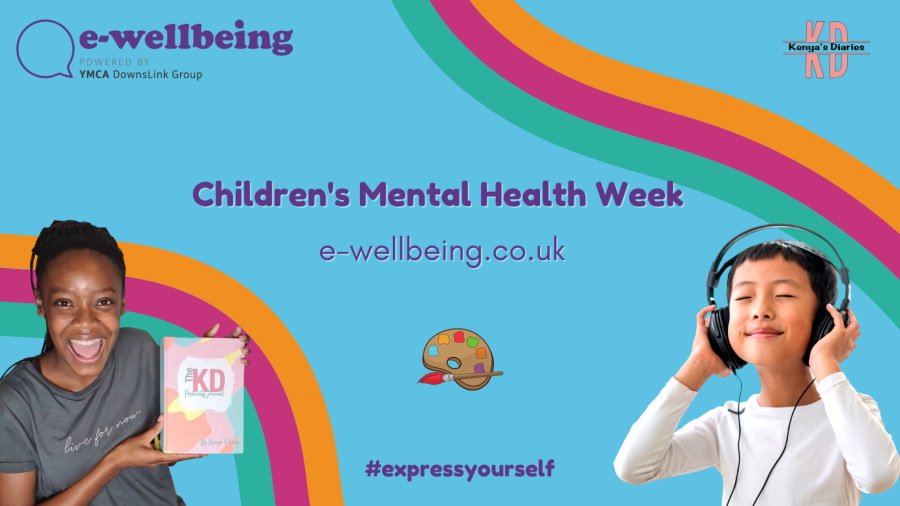
    This year’s theme for Children’s Mental Health Week is Express Yourself, so e-wellbeing has teamed up with Kenya, a 14-year-old mental health activist and social entrepreneur from Kenya’s Diaries to encourage young people to creatively express themselves and look after their mental wellbeing. Keep an eye on e-wellbeing’s Instagram page for updates this week from our youth ambassadors with practical and creative ways for young people to express themselves whilst looking after their mental health and wellbeing.

    For further information and to download e-wellbeing’s practical resources during Children’s Mental Health Week and beyond, click here to be taken to the mental health resources section on the School Resources page.

  • Festive Fun at Horsham Y Centre, Home to 50 Young People

    Festive Fun at Horsham Y Centre, Home to 50 Young People

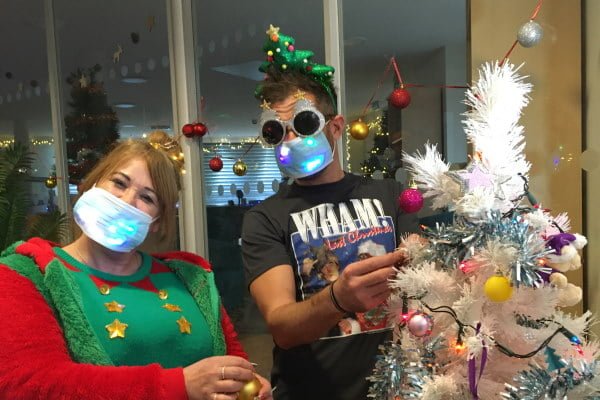
    Our 24-Hour supported accommodation in Horsham, the Y Centre, is our largest housing project and is home to fifty young people, who may otherwise be homeless. Every year, deputy manager Mel Haynes, becomes our very own Mrs Santa, pulling together a festive transformation of the communal areas, to create some seasonal magic for everyone staying at the centre over the Christmas period.

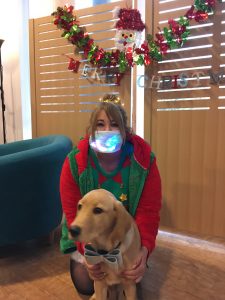
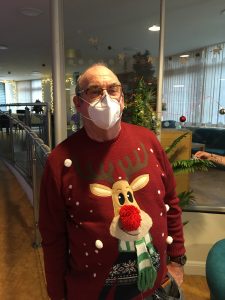
    Despite Covid-19, Mel and her team created magic again this year and all the staff dressed up for the occasion. Mel, determined not to let Covid spoil their fun, had even sourced masks with fairy lights.

    Helped by residents, Amber and Connor, they decorated the centre with over 20 trees (all donated by the local community and businesses).

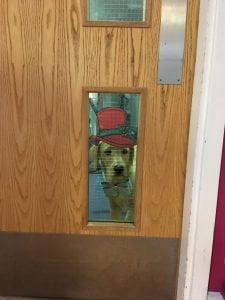
    Another, genius Covid-19 secure addition to the decorations, is the addition of Christmas stickers to the perspex screen on reception so that staff look festive no matter what they’re wearing. Fergus, their trainee therapy dog, even gets his own on the door to the back office.

    As an organisation we have been humbled by the outpouring of love and support all of our housing projects, right across Sussex and Guildford, have received by their local communities.

    For anyone inspired by the outfits at Horsham why not join in with our Christmas Jumper Day tomorrow. Tag (@ymcadlg) and share your pics and we will post across our social channels. If you want to make it a fundraiser, simply text XMASJUMPER to 70460 to Donate £2.