Author: Debbie Watkins

  • School Mental Health Champions celebrate at annual event 

    School Mental Health Champions celebrate at annual event 

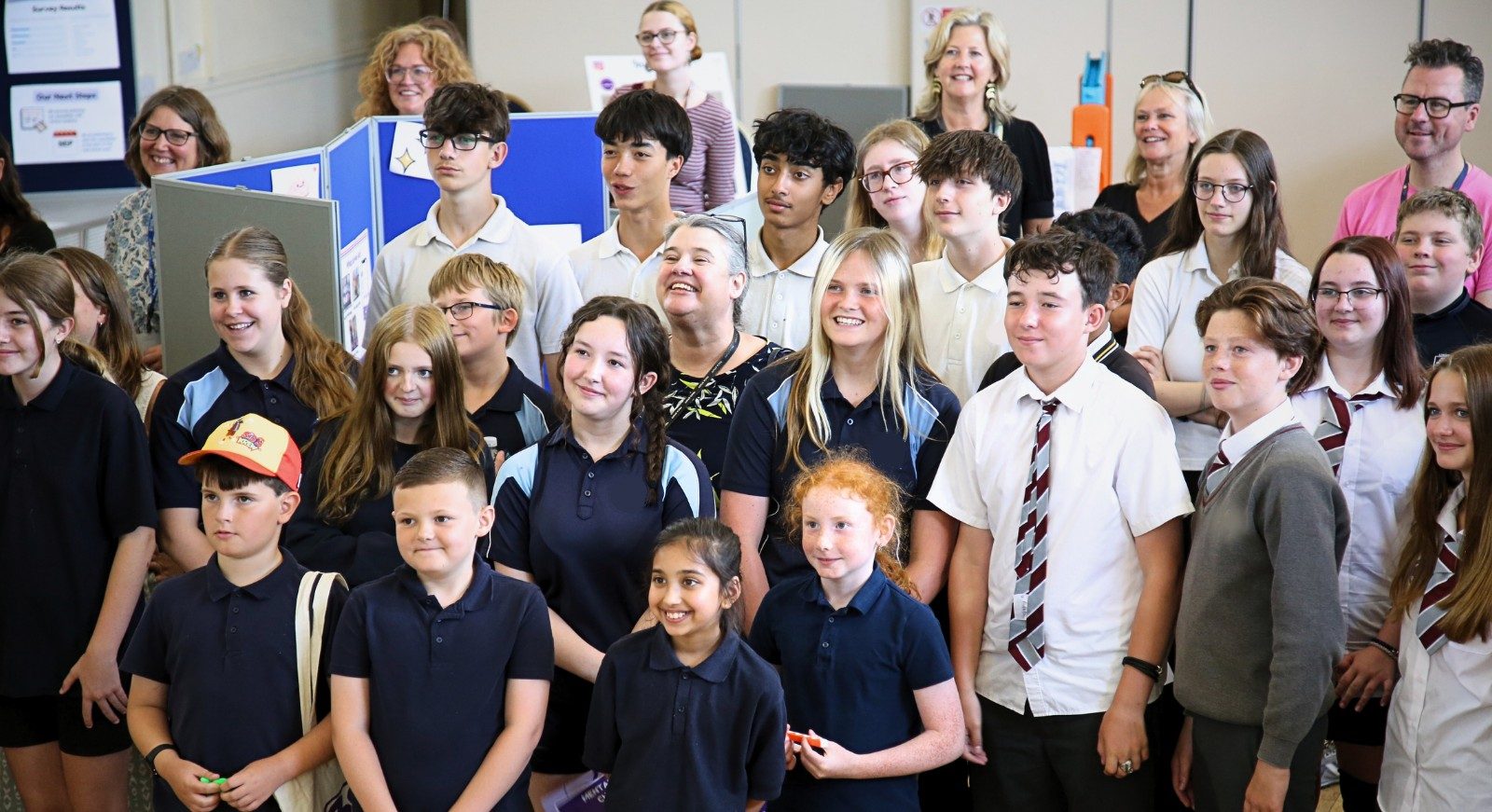
    Young Mental Health Champions gathered last month in a marketplace-style celebration event in Ralli Hall, Hove, to share the challenges and successes encountered in this past school year.   

     

    Our Champions project, run in partnership with Public Health Schools at Brighton and Hove City Council, is led by young people across secondary and primary schools in the city. It aims to empower young people to take action to improve the mental wellbeing of both students and staff and to challenge mental health stigma. 

    The 2024-25 Champions did an outstanding job preparing and running stalls for their respective schools, showing guests what they had achieved. 

    Among the attendees were Emily Smith from NHS Sussex, Becca Randall from Health Innovation KSS and Megan Lewis from Public Health Schools who delivered a heartfelt speech. We were also delighted to welcome our very own DownsLink Group CEO Emily Brock.  

    The young people enthusiastically took part in a scavenger hunt which was followed by the highlight of the day: the traditional award ceremony for students and staff. The event was documented by volunteer photographer, Tabs.  

    Our e-wellbeing Digital and Engagement Specialist Charlotte Heany said: “The event really shone a light on the importance of youth voice and how much this should be valued.” 

    This year, some of the Champions have focused on optimising school website navigation for accessing mental health resources; others on improving anxiety in class and exams through shifting mindset.  

    At one participating primary school, they have developed and established Mental Health Champions’ Golden Playtime Rules to promote a safer, more enjoyable playground experience. Using surveys to gather data, they have then used assemblies to share insights and resources with fellow students, helping to raise further awareness of mental health and the project and its impact.   

    “I didn’t know so many schools were involved in doing Mental Health Champions. I thought there would maybe be a couple others. It’s been so interesting to see a lot of schools I recognise doing it and seeing some of the changes they’ve made.  

    “If anyone is thinking about doing Mental Health Champions, then you should! It’s a good opportunity because mental health hasn’t really become an important thing in schools until recently, so I think it’s important to do more things like this as it makes people more aware.”

    Esmé, Mental Health Champion 

    How does the Mental Health Champions project work in schools? 
    Participating schools recruit up to 12 Champions who take part in peer-led mental health and emotional wellbeing workshops. Together, they identify key issues affecting wellbeing and the students develop actions to address them. They are supported by our e-wellbeing staff and Youth Ambassadors, a group of creative 16 to 25-year-olds, passionate about improving the emotional health and wellbeing for all, who facilitate the workshops and co-produce project materials.  

    Since its inception in 2020, Champions have successfully delivered a wide range of initiatives, such as tackling bullying and discrimination, promoting better sleep hygiene, creating safe spaces for students feeling anxious or overwhelmed, eliminating gender labels on school uniforms, supporting students throughout the COVID-19 pandemic, and much more!  

    Previously Champions encountered challenges seeing their action plans implemented due to lack of awareness from the wider school community and senior leadership. This was addressed this past year by directly involving senior leadership team members in the project by attending the workshops and discussing proposed steps with the Champions. The resulting increased engagement in turn contributed to wider adoption in the participating schools and more positive impact on student and staff well-being. 
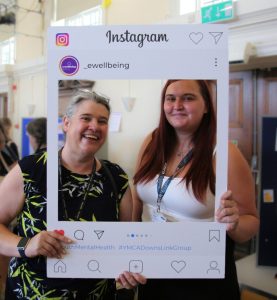
    Sally Rodgers, English Teacher and Mental Health Lead at Portslade Aldridge Community Academy (PACA) which joined in 2021, said: “The defining feature is how it has been continuously improving. Following its inception in 2020, surveys were brought in and the project has adapted accordingly, becoming more focused and effective.”   

    The project not only helps all students access mental health support in their school but also enables the Champions to build valuable skills in public speaking, leadership and general confidence, preparing them for various roles in life.  

    The young Champions also take pride in their role. When asked what the programme meant for her, Mental Health Champion Jessica (year nine) said: “I hope it will benefit others like it’s benefited me. I wish it had existed in my year seven.”   

    Charlotte Heany adds: “The students are so passionate about making a difference and they know what young people need more than we do!”  

    Listening to children and young people has always been integral to the work we do at YMCA DownsLink Group and this project feeds into our new Youth Voice and Leadership Strategy: embedding the voice of all our young people in the strategic priorities that shape our organisation – treating young people as experts in their own lives. 

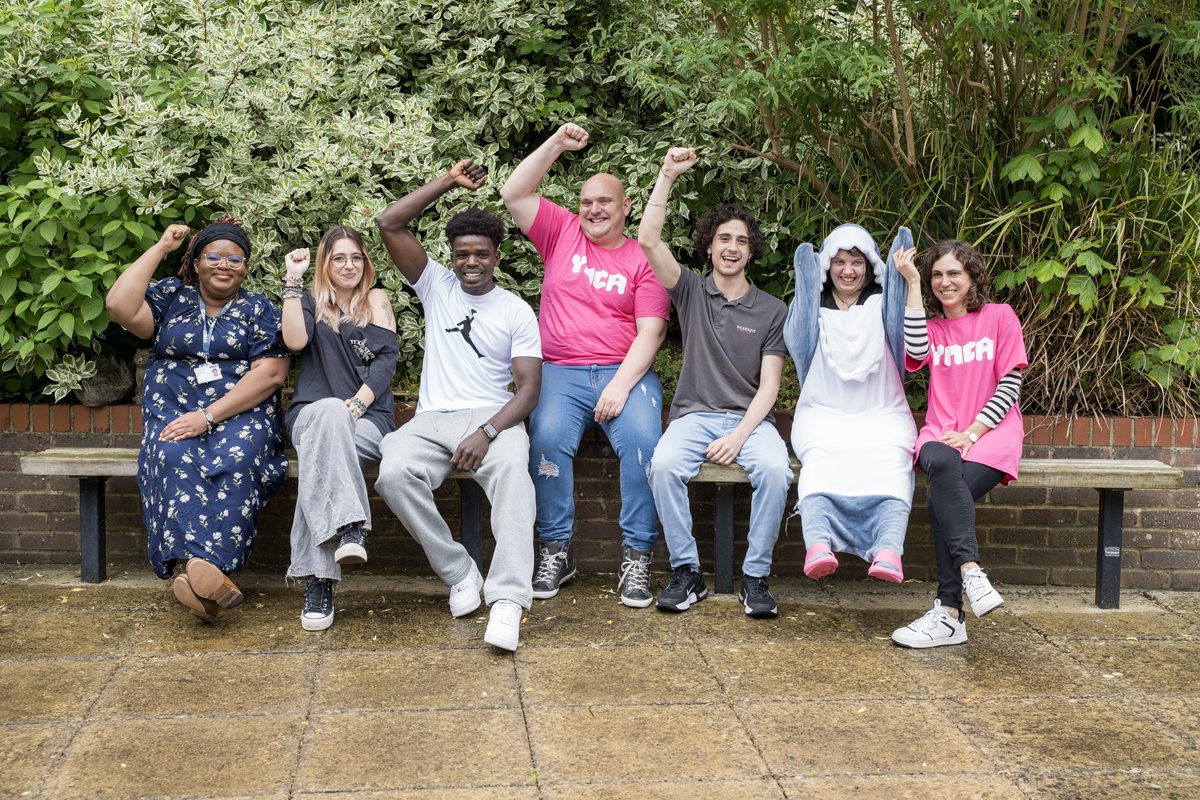
    Thank you to e-wellbeing Youth Ambassadors Hannah, Louisa, Imogen, Tabs and Soph for helping to run this year’s event, and of course to all the incredible young people who have taken part in this year’s project – you have been AMAZING and we are so grateful for all your hard work!  

    Find out more about e-wellbeing. 

    Read more about Tabs here. 

  • Grooming gangs – the reality behind the headlines

    Grooming gangs – the reality behind the headlines

    In the wake of the announcement of an inquiry into grooming gangs, our sexual exploitation project manager talks about the myths that persist around abuse.

    The Prime Minister has announced a full national inquiry, following the report by Baroness Louise Casey. This moment has reignited national conversations about child sexual exploitation (CSE) and what we see as the dangerous myths that continue to cloud public understanding.

    In our What is Sexual Exploitation (WiSE) project, we often discuss these myths and the effect they have on our young people. Perpetuating stereotypes can make a young person less likely to disclose exploitation or even be able to recognise the abuse.

    This narrow view can also make adults less likely to recognise signs of abuse. Some of those misconceptions are:

    Myth 1: It’s only ‘gangs’ that exploit children

    The term ‘grooming gangs’ has dominated headlines but it can be misleading. While some high-profile cases have involved groups of offenders working together, the majority of child sexual exploitation cases in the UK are committed by individuals acting alone. Focusing solely on group-based abuse risks creating a false sense of security. It suggests that exploitation is something that happens ‘over there,’ in specific communities or under specific circumstances. This myth also distracts from the growing threat of online grooming, where individuals exploit children through social media, gaming platforms, and encrypted messaging apps. These abusers may never meet their victims in person but the psychological and emotional harm they inflict is just as real.

    Myth 2: Child exploitation is always violent and obvious

    One of the most persistent misconceptions is that child exploitation is always overt and violent. In truth, grooming is often subtle, manipulative and psychological. Perpetrators build trust with victims, isolate them from support networks and create emotional or financial dependencies. This makes it harder for victims to recognise abuse or seek help.

    Myth 3: Teenagers can consent to their abuse

    Baroness Casey’s report highlights a disturbing trend: professionals often failed to protect victims because they viewed them as ‘making choices’ or being ‘in love’. This adultification of children, especially girls, led to cases being downgraded or dismissed. The report recommends reviewing the law in England and Wales so adults who have sex with a child under 16 are always charged with rape, calling on society to ‘see children as children’.

    The grooming gang scandals are not just about the crimes committed, they are about how society and its institutions respond to the most vulnerable. Dispelling myths and confronting uncomfortable truths is the first step toward justice. As the new inquiry unfolds, we must ensure it is not just another report on a shelf, but a turning point in how we protect young people in the UK.

    YMCA DownsLink Group’s WiSE (What is sexual exploitation) project works with children and young people across Sussex and Surrey. Our primary focus is supporting children and young people affected by sexual exploitation through raising awareness, education and empowerment.


  • Charity partner, Mayday, take on a charity skydive

    Charity partner, Mayday, take on a charity skydive

    Doug Bellamy takes the leap for charity – fourth time lucky !

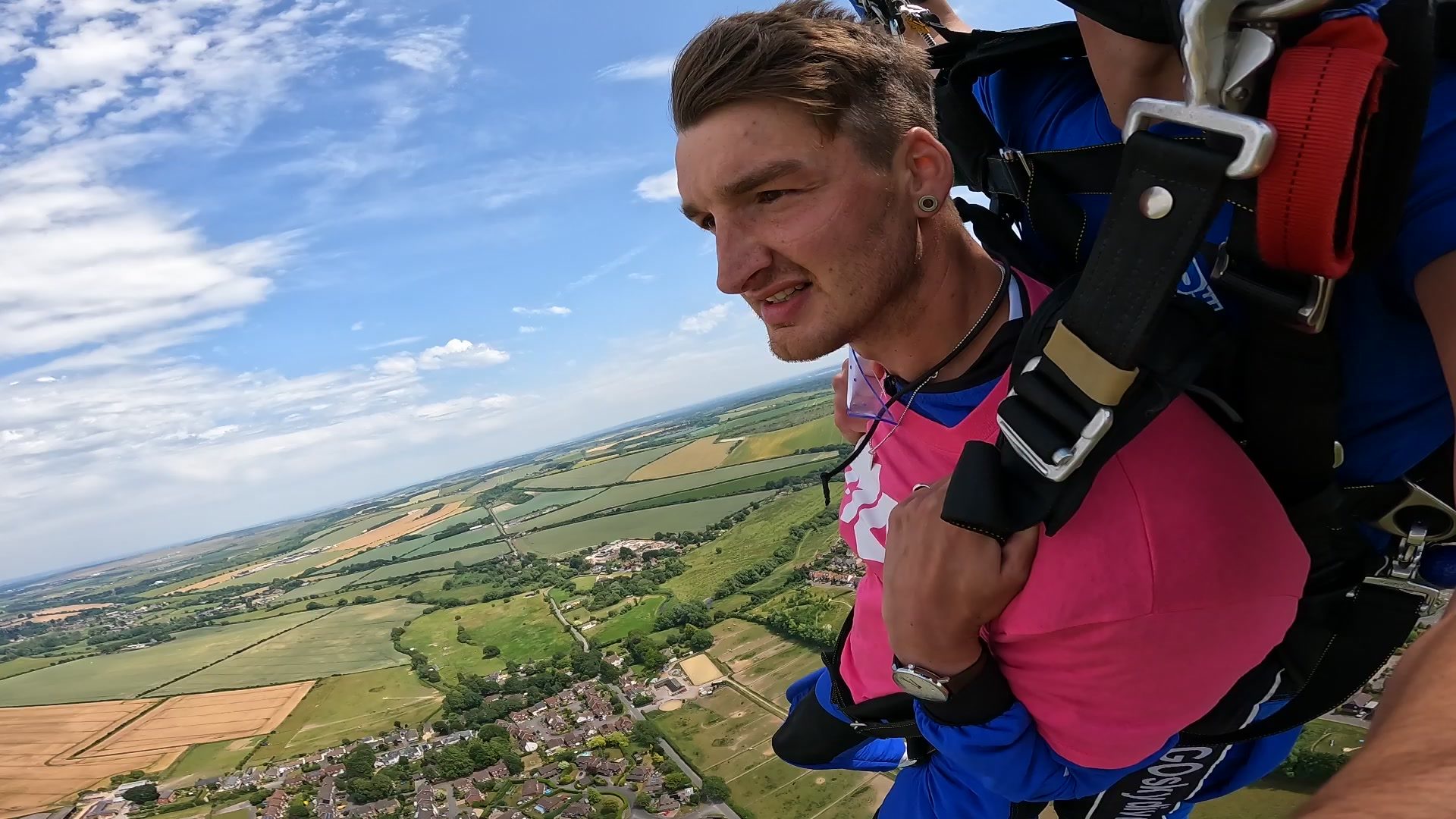
    After three weather-related cancellations, Doug Bellamy, COO of Mayday Group Limited, finally soared through the skies on his fourth attempt – completing a breath-taking skydive from 15,000 feet in support of YMCA DownsLink Group.

    A nervous Doug spoke to Mark prior to the jump saying: “I’m relieved that it is going ahead, but am absolutely terrified! It’s a great feeling to give back and raise money for YMCA DownsLink Group.”

    Following the skydive, Doug said: “It was absolutely worth the wait. The adrenaline, the view, and knowing it was all for a great cause made it unforgettable.”

    Doug’s determination paid off as he took the plunge in perfect conditions, freefalling at over 120mph before safely landing with a huge smile and an even bigger sense of accomplishment. His courage and persistence have not only inspired many but also raised an incredible £1,000 for YMCA DownsLink Group, helping to support young people across the region.

    A huge thank you to everyone who supported Doug’s daring feat. Your generosity is making a real difference!

  • Our charity partnership launches research into youth homelessness at Brighton event

    Our charity partnership launches research into youth homelessness at Brighton event

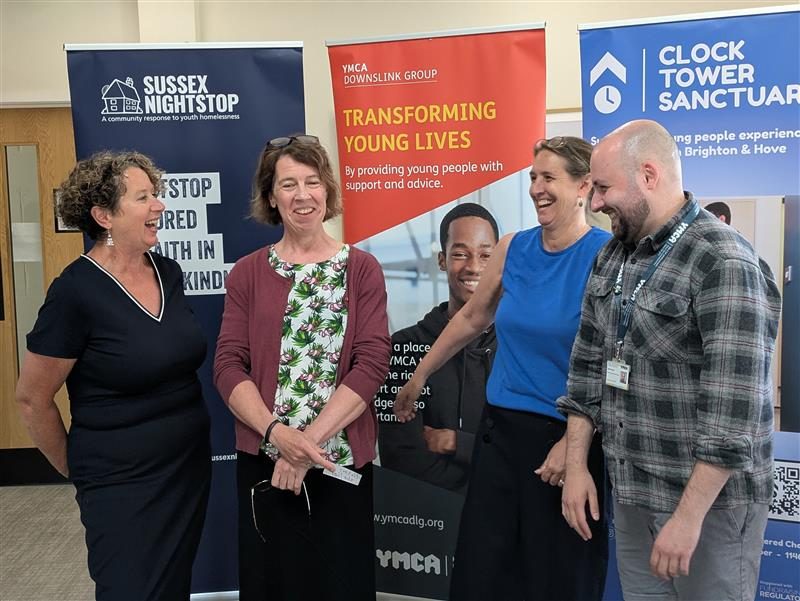
    We have partnered with two Brighton and Hove youth homelessness charities to share insights from new research into the issue within the city at an event this week. This comes amid a national increase in youth homelessness by 10% in the last year.

    Together with Sussex Nightstop and The Clocktower Sanctuary, we will now utilise the findings from the youth-led blueprint project, Here for You, and represent young people’s views as Brighton and Hove City Council develops its rough sleepers and homelessness strategy.

    As three charity partners, we launched the findings of the research at an event at The Projects, Nile Street, on Wednesday 25 June. The insight report, funded by IMEX and supported by Sussex Community Foundation, was driven by the need to ensure young people experiencing homelessness don’t fall through the gaps. Although there is national data about homelessness, this youth-led research looked solely at Brighton and Hove.Our head of youth advice and support speaks about homeless research in brighton

    Our Youth Advice Centre in the city is part of our Youth and Support Service, which is headed up by Thom Palser. “The Here for You research project, which focused specifically on young people, was needed to help understand young people’s needs when they access support in the city,” he said.

    “We’re calling for a youth chapter to be included within BHCC’s rough sleepers and homelessness strategy and to consider the 16-25 age group as a cohort with specific needs and to understand that age can be a vulnerability too.

    “Our voluntary sector organisations are often the first port of call for young people facing homelessness and we need to build the capacity of these frontline services and to have a consistent approach and understanding.”

    Sussex Nightstop CEO Alison Marino said: “The importance of a young person’s first encounter with support services can’t be overstated. A total of 48% of those experiencing homelessness in later life had their first time rough sleeping before the age of 25. Prevention at an early stage is crucial if the long-term and wide-ranging impacts of homelessness are to be avoided and young people given every opportunity to fulfil their potential.”

    She said that until early 2024, there had not been a debate in parliament about homelessness in over 30 years and the design of services typically considered people experiencing homelessness to be one homogenous group, despite the fact that the needs of young people were distinctly different.

    The Clock Tower Sanctuary CEO Fabia Bates said: “Young people often don’t present at services asking for help until they are at crisis point. They also don’t recognise themselves as homeless if they are, for example, sofa surfing, and they can be unaware of their rights. Through this research, they told us they want to know what support and advice is available to them at which service – where do they go to find out where to get a shower, where can they find somewhere to sleep tonight.

    “They said the most important thing was being met with kind and friendly words.

    “When a young person reaches out, we don’t want them to turn around and walk out again.”

    Recommendations from the report included focusing on:

    • communications – with inclusivity, clarity of service offer and an encouraging and supportive approach at the fore
    • impact and insight – maximising the engagement of young people in the ongoing co-production of services through joined up and representative youth voice initiatives.

    The report puts the experiences of young people front and centre and is clear that their ongoing involvement is fundamental to future improvements.

    We concluded the launch by saying the responsibility of youth homelessness is a shared one. The report is a call to action for a city-wide response, with recommendations that enable everyone to play a part in ensuring young people know that their city is here for them.

    You can read the full report here.

  • Colleague presents at leading health and social care conference – thank you!

    Colleague presents at leading health and social care conference – thank you!

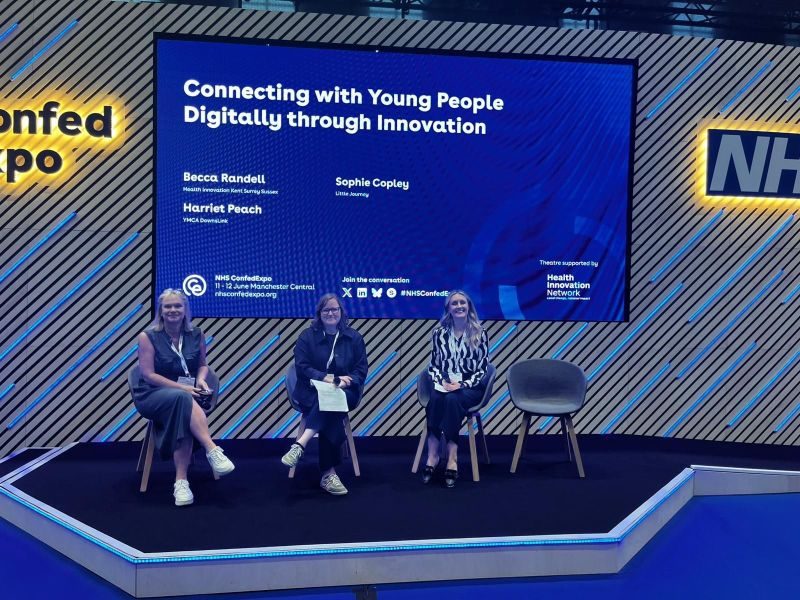
    It’s not often that one of our colleagues is presenting straight after Secretary of State for Health and Social Care Wes Streeting – but that’s what happened at this year’s NHS Confederation Expo at Manchester Central last week.

    Our Youth Voice and Engagement Manager, Harriet Peach, spoke at the UK’s leading health and care conference, where more than 5,000 leaders, professionals and partners from across the health and care sector came to collaborate and share insights.

    Harriet was delivering a session alongside Becca Randell, Mental Health Lead at Health Innovation Kent Surrey Sussex and Sophie Copley, CPO and Co-founder, Little Journey.

    Harriet said: “Our session focused on best practice for co-designing innovations to support children and young people. They are often missed when innovators develop and design their solutions. And innovators have told us they don’t always know how to engage with these audiences.”

    The presentation included a free checklist featuring a step-by-step guide to working with young people. They also showed videos from young people sharing insights and case studies from organisations who have engaged with children and young people.

    While at the conference, Harriet also enjoyed having a look around. “There were a lot more of the third sector represented than in previous years.

    “An interesting highlight for me was the robotics being used for surgery.”

  • CEO welcomes historic investment in social housing

    CEO welcomes historic investment in social housing

    Our CEO, Emily Brock, responds to the Chancellor’s Spending Review statement and to news of the plans to scrap the Vagrancy Act of 1824:

    “We welcome the Government’s plans to invest in social and affordable housing. Access to affordable housing remains a significant barrier to the young people we support.

    “We provide nearly 600 beds for young people who would otherwise be homeless and we’re acutely aware of the demand for beds across our areas of Sussex and Surrey.

    “When young people living with us are ready to move on, the current housing crisis means there is a shortage of properties available.

    “The £39bn announced for social and affordable housing recognises that systemic change is needed.”

    In a separate announcement this week, the Government said it would scrap the Vagrancy Act by Spring 2026. A Parliamentary vote in 2022 previously approved repeal of the Act but a timetable had not been set.

    Emily said: “I’m pleased to see that after 200 years of rough sleepers being criminalised, the government is set to repeal this outdated law which further marginalises already vulnerable people.”