Author: Debbie Watkins

  • New report on youth homelessness highlights 10% increase

    New report on youth homelessness highlights 10% increase

    We welcome the release of a new report that highlights the growing issue of youth homelessness in the UK. The findings are concerning, with a 10% increase in the number of young people at risk of homelessness in 2023 to 2024 since the previous year.


    The Centrepoint report, Hidden in Plain Site: Understanding Youth Homelessness in the UK, sheds light on the issues young people at risk of homelessness are experiencing or facing across the UK.

    In the South East, we have the second-highest number of young people affected by homelessness, making our work more needed than ever.


    What are we seeing at YMCA DownsLink Group?


    Last year, we provided a home to 1,094 young people. We are the largest provider of accommodation for young people experiencing or at risk of homelessness. We gave a safe place to call home to 11% of the total number (10,002) of young people facing homelessness in the South East of England. And we offer more than just a bed for someone in crisis. We equip young people with life skills and emotional support to enable them to thrive.


    How many young people are facing homelessness?


    Youth homelessness in the UK is growing. According to Centrepoint’s newest figures, 118,134 young people approached their local authority last year (2023 to 2024) for experiencing or being at risk of homelessness.

    This number equates to one in 62 young people being at risk of homelessness.

    While this number is shocking, it is likely to be an underrepresentation, with the real number being much higher. While Centrepoint’s report is robust, it doesn’t consider the hidden homeless, such as those who are sofa surfing.

    In the Southeast of England, 10,002 young people approached their local authority presenting as homeless or at risk of homelessness.


    Why are young people facing homelessness?


    Young people can be experiencing or be at risk of homelessness for many reasons. The report highlights that, as seen in previous years, the leading cause of youth homelessness is that family or friends are no longer willing or able to accommodate them. Last year, 50% of the young people who approached their local authority said it was because of this reason.
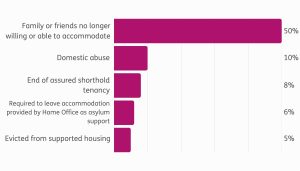
    reasons young people face homelessness

    Another rising issue is domestic abuse. Of those experiencing or at risk of youth homelessness last year, 10% (6,210 young people) were at risk due to domestic abuse.

    Other reasons why young people might be facing homelessness include end of assured shorthold tenancy, being required to leave accommodation provided by Home Office as asylum support or being evicted from supported housing.


    What are some of the issues young people experiencing homelessness are facing?


    One thing this year’s report has highlighted is the role that gender is playing in how young people are experiencing homelessness and some of the issues that they face.

    Last year, 54% (54,500 young people) of those who presented to their local authorities as experiencing or at risk of homelessness were women.

    Young women with children often face additional barriers in securing safe and stable housing due to childcare responsibilities. The absence of crucial support networks for young parents experiencing homelessness significantly amplifies the risks and issues youth homelessness presents.

    For young men, of those who presented as homeless, only 55% of them were provided with relief duty and 33% a prevention duty. This shows that young men are more likely to look for help once they’ve reached crisis point.

    The way young men and women respond to youth homelessness is different, which points to a need of tailored support.


    What recommendations did Centrepoint’s report make to help youth homelessness?


    1. The Ministry of Housing, Communities and Local Government should increase oversight of local authorities’ implementation of the HRA to ensure best practices are followed and gaps in service are addressed, improving youth homelessness support.
    2. The government should include a youth-focused chapter in its cross-government strategy to end homelessness, addressing root causes and providing emergency housing, while fostering collaboration across housing, employment, education and welfare services.
    3. The government should provide ring-fenced funding for local authorities to support youth homelessness initiatives, ensuring resources are dedicated to implementing the HRA and supporting young people facing homelessness.
    4. The Homelessness Code of Guidance should be amended to clarify local authorities’ obligations during assessments, ensuring young people get the support they need by defining acceptable evidence and burden of proof.
    5. The government must commit to building 90,000 social rented homes annually, including 40,000 one-bedroom units, to provide affordable housing for vulnerable young people and address the specific needs of those who have lost family support.

    If you would like to find out more about our housing support here.

    please note: image is a model

  • Welcome to two new independent committee members and a new trustee to our board

    Welcome to two new independent committee members and a new trustee to our board

    Following a recent recruitment process, we are delighted to welcome two new Independent Committee Members and a new Trustee to our Board. These three appointments reflect our commitment to strengthening expertise and building a high-performing Board to help children and young people have a fair chance to be who they want to be.

    We welcome Sarah Fulham, Dr Helen Curr and Damian Haley:


    Sarah Fulham, Independent Committee Member: Sarah has over 20 years’ experience in the housing, homelessness, care and support sector, the last 13 years specialising in young people’s services. Although London-based she has strong Sussez roots, and first hand lived experience of homelessness and supported housing as a young person. Previously she was Head of Operations at Look Ahead leading on young people services & Ofsted, and currently is the director of Domestic Abuse services at Hestia.


    Helen Curr, Independent Committee Member: Helen is a Clinical Psychologist with experience in a broad range of mental health services within the NHS and in partnership. Helen took on senior leadership roles in the social enterprise sector from 2015 and is currently CEO of Here, a healthcare social enterprise in Sussex. With a passion for social impact, Helen brings in-depth experience of developing organisational cultures and governance structures that enable person centred models of care.

     

    Damian Haley, Trustee: Damian has worked for local and national social housing providers in a range of roles for over 25 years. Damian is currently Assistant Director – Development & Sales at Saxon Weald working across Sussex and he brings experience of affordable housing finance, management and developing new build schemes for homelessness and supported living. Damian is keen to support the positive difference that we can make to young people’s lives in providing opportunities to be who they want to be.
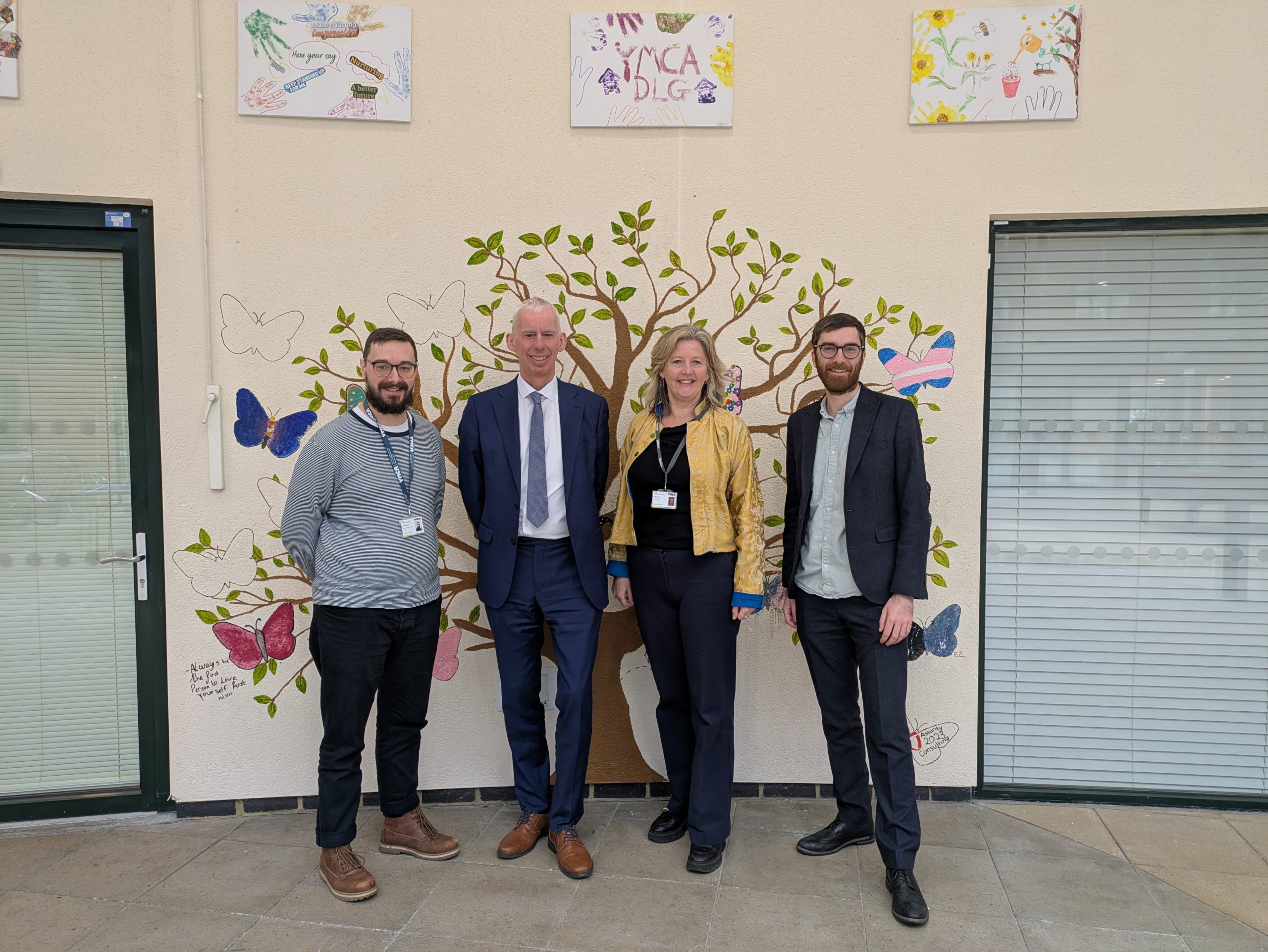
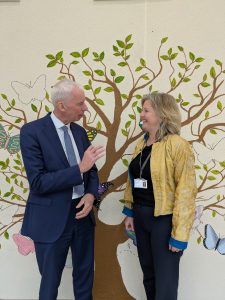
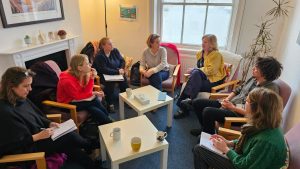
     

    Emily Brock, CEO said “We are fortunate to have such strong representation on our Board and Committees. Sarah, Helen and Damian each bring their own expertise and a fresh perspective. I am confident that these recent appointments will make a difference to the lives of children and young people as we work together to prevent youth homelessness and support young people’s emotional and mental health.”

  • MP John Milne and MP Siân Berry visit our projects

    MP John Milne and MP Siân Berry visit our projects

    Two MPs visited us in Horsham and Brighton to find out more about our work supporting young people in their constituencies. 


    Horsham MP John Milne (Lib Dem) visited our Horsham Y Centre on February 7 in the morning and Brighton Pavilion MP Siân Berry (Green) went to our Brighton Youth Advice Centre (YAC) in the afternoon.


    MP John Milne visited Horsham Y Centre


    John Milne visited our supported housing to learn more about our support and some of the issues facing young people in Horsham. 

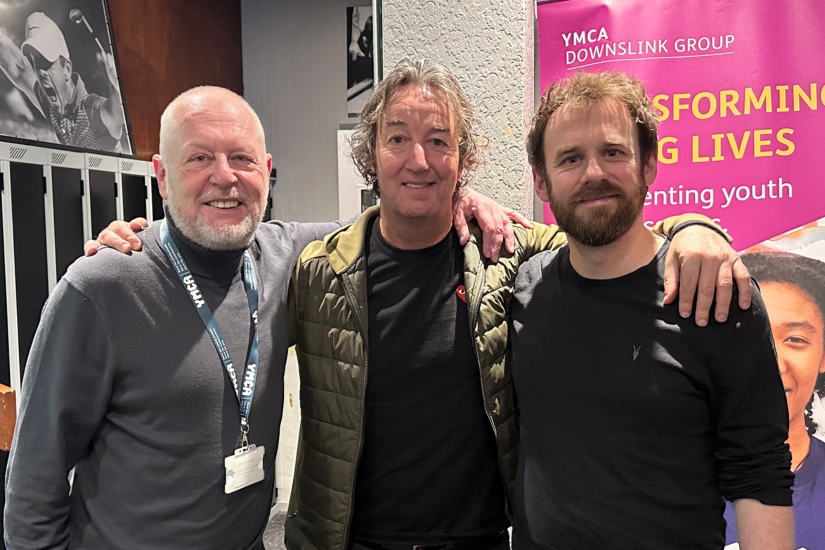
    He met with CEO Emily Brock, Manager David Martin, Head of Fundraising and Communications Debbie Watkins and YMCA E&W Campaigns Manager Jack Chesterton at our Horsham Y Centre. 

    David gave John Milne a tour of the building, including inside one of the flats for 16 to 25-year-olds. The Horsham Y Centre provides housing to 50 young people, with 32 self-contained flats and eight shared. The focus of the work is to help develop the young people’s skills and confidence so that they can move on from supported accommodation and live independently. 

    The group discussed the need for housing for young people in Horsham and the lack of affordable options for those who are ready to move on from supported housing. 

    John Milne was interested to hear that around half of the 16 to 25-year-olds living in the Horsham Y Centre were care experienced.  

    “Housing for young people is clearly an important issue, especially either after university, at key ages of 16 to 18 and even more so for those moving out of care,” he said. 

    “I understand how difficult it is even for young people who have family and support behind them but to think of those who don’t have that back-up is scary. If it was possible to fix housing and other problems for our young people at this stage, they could be sorted for the years to come.” 

    The discussion also included welfare benefit issues such as the lower level of Universal Credit for under 25s and the difficulties of the taper rate leading to limited incentive to work more than 16 hours per week. Young people who move into work while living in supported accommodation often experience sharp shocks to their income.  


    MP Siân Berry visited our Youth Advice Centre in Brighton


    In the afternoon, MP Siân Berry went to our Youth Advice Centre in Brighton where she met CEO Emily Brock, Service Manager Leon Groombridge, Head of Youth Advice and Support Thomas Palser and our partners CEO of Sussex Nightstop Alison Marino, CEO of The Clock Tower Sanctuary Fabia Bates and Head of Supported Housing at Impact Initiatives Stevie Graves.

    Siân was able to see the way we work closely with our partners to address the needs of young people in Brighton.

    The group talked about the lack of local youth specific data on homelessness which means it’s difficult to fully understand the problem, the situation with emergency accommodation in the city and the national 136 campaign to end youth homelessness. 

    Service Manager Leon Groombridge said: “Meetings like this give us as the third sector a chance to outline the trends we see in the people we work with so that we can continue to provide vital support to young people in our community.” 

    Siân’s interest in supporting the young people in her constituency was evident and she promised to help advocate for YAC as it faces severe financial pressures to keep the service running.  


  • LGBT+ History Month 2025

    LGBT+ History Month 2025

    This month is LGBT+ History Month 💖

    We know how important LGBTQ+ issues are to many of the young people we work with so we want to shine a spotlight on the people featured in the campaign this year.
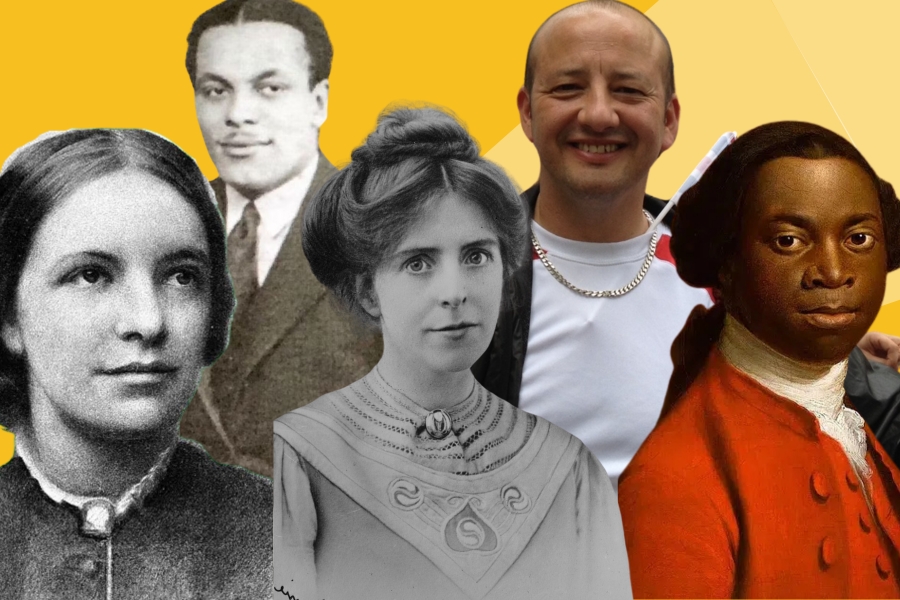
    LGBT+ History Month has now been going for 20 years. This year, the five chosen LGBT+ people have created social change from across the centuries in progressing change for women, the environment, housing, nuclear disarmament, preserving heritage, abolition of the slave trade, and immigration, among many other causes.

    Octavia Hill - LGBT+ History Month 20251. Octavia Hill –

    One of the three founders of the National Trust, Octavia Hill was a pioneering thinker and social reformer. She worked tirelessly to improve urban housing and to protect green spaces and the impact of her life and work is still being felt. Her belief in the importance of access to nature for human wellbeing and the need to stop the destruction of the natural landscape are even more relevant today.


    ivor cummings LGBT+ History Month 20252. Ivor Cummings –

    Ivor Cummings is often known as ‘The gay father of the Windrush generation.’ A senior civil servant – and the only Black official – in the Colonial Office (a predecessor of the Foreign Office), Cummings devoted much of his life to serving Black citizens who’d arrived from the Colonial-era Caribbean and African nations. He was proud of his sexuality at a time when homosexuality was still illegal in the UK.


    annie kenney LGBT+ History Month 20253. Annie Kenney –

    Ann ‘Annie’ Kenney was an English working-class suffragette and socialist feminist who became a leading figure in the Women’s Social and Political Union. She co-founded its first branch in London with Minnie Baldock. Annie was paid £2 a week by the WSPU. In these early days of the militant campaign, Annie demonstrated an ability to carry our daring and high profile stunts, unfurling banners at the Albert Hall, ringing incessantly the bell of the Chancellor of the Exchequer. She was also an effective organiser and a charismatic speaker, drawing both recruits and donors to the cause.

    charlie kiss LGBT+ History Month 20254. Charlie Kiss –

    Charlie was one of 44 women who broke through the fence at dawn on New Year’s Day, 1983, dancing in a circle on top of the missile silos. In 2002, with the love and support of his family and friends, Charlie began the transition to being male. His life became more settled, calm and focused. He was simply happier and more himself. In 2015, Charlie became the first trans man to run for parliament in the UK, standing for the Green party in Islington South & Finsbury. He leaves a legacy to be proud of: more Greens on Islington council, and better support and NHS funding for trans people.

    Olaudah Equiano LGBT+ History Month 20255. Olaudah Equiano –

    In 1789, a middle-aged African-born man in London published The Interesting Narrative of the Life of Olaudah Equiano, aka Gustavus Vassa, the African, laying the foundations for new genres of literature and new ways of understanding the experiences of enslaved people. In this autobiography, the author, Olaudah Equiano, detailed his life journey from African captivity to Atlantic slavery to British freedom. His book is considered the most famous slave memoir of the 18th century and is a powerful and terrifying read and established Equiano as a founding figure in black literary tradition.

    Find out more about LGBT+ History Month here.

  • The Castle Snooker and Social Club fundraise vital money for young people in Sussex and Surrey

    The Castle Snooker and Social Club fundraise vital money for young people in Sussex and Surrey

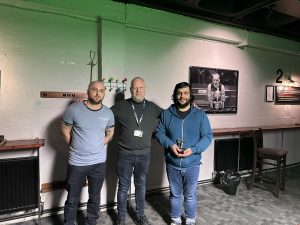
    The Castle Snooker and Social Club ran a snooker event for over 34 people, raising vital funds for young people across Sussex and Surrey.

    It was amazing to meet so many people and hear their stories and personal experiences about the work we do here.

    Over the course of the day, the club raised nearly £600, which will go towards key services we provide to children and young people across Sussex and Surrey. Big thanks to Simon Dent for sponsoring the event.

    If you, or your company, want to run a charity challenge event in aid of YMCA DownsLink Group, get in touch! Would love to hear from you and help support any ideas you may have.

    Read more about our amazing corporate partners here.

  • We have secured vital housing for young people in Crawley

    We have secured vital housing for young people in Crawley

    We have successfully purchased 10 properties in Crawley, ensuring essential housing for young people continues.  

    This acquisition includes nine properties previously leased from London and Quadrant housing association (L&Q) and an additional property for general needs adults. 

    The nine properties provide 27 homes for young people up to the age of 25, offering transitional accommodation to help them move from supported housing to more independent living. Each young person is assigned a key worker although 24/7 support is not provided. 

    Additionally, we have acquired Ashdown Court, a 10-unit property for general needs adults. Existing tenancies will be honoured, and as they end, Ashdown Court will transition into a mix of general needs and homes for young people living independently. 

    Our Director of Services Lorri Holding said: “We’re delighted to have bought these housing units which will allow us to continue offering a safe, nurturing environment where young people can develop essential life skills and transition to independent living. We’re committed to supporting them as they build a sense of belonging in their local community.” 

    The purchase was made possible through the Recycled Capital Grant Fund (RCGF) provided by Homes England, following the sale of student accommodation in Guildford in 2022.  

    In July 2024, we used their RCGF to buy a Brighton property that is home to eight young families in supported housing from Peabody Trust.