Author: Debbie Watkins

  • A Call to Action from LGBTQU+ Youth in Crawley

    A Call to Action from LGBTQU+ Youth in Crawley

    Our young people from the LGBTQU+ Haven in Crawley recently wrote to their local MP calling him to take action to protect the human rights of LGBTQU+ people. Eli Adie, West Sussex Youth Hub Development Manager, tells us more below.

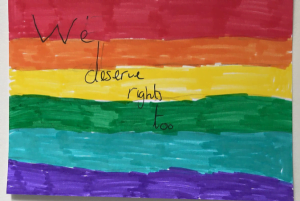
    At the start of June 2022, we were asked to get our young people to write postcards to the Prime Minister and their local MP by Katie Vincent, the CEO of Allsorts Youth Project (the commissioned LGBT+ service for Sussex). The team at the LGBTQU+ Haven in Crawley saw this as a great opportunity to give our young people the chance to think about how they could get involved with the democratic process and get their voices heard on issues directly impacting on them.

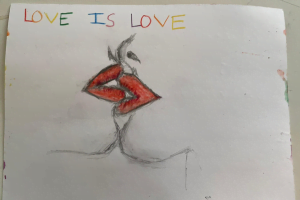
    Love is love postcard LGBTQU+ We deserve rights too postcard LGBTQU+

    The young people decided that they wanted to address their postcards directly to Henry Smith, the local MP for Crawley, so we started the session off by looking at Henry Smith’s voting record on theyworkforyou.com. The young people were upset that when looking at Henry Smith’s voting record, he appeared to always vote in favour of animal rights but generally against granting LGBTQU+ rights.

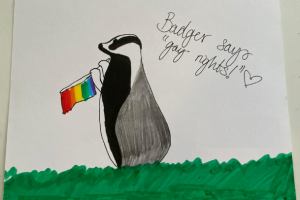
    LGBTQU+ badger postcard

    We asked the young people to use their own words to talk about the action they wanted to see the government take to protect the human rights of LGBTQ+ people, but especially trans people following a horrendous few weeks of anti-trans news in the lead up to June 2022 (Pride Month).

    We have sent the postcards and messages to Henry Smith MP directly via email and have invited him to come and meet some of our young people and their parent / guardians, so that he can hear directly from them about why he should stand up for LGBT+ rights in parliament. We will also be publishing this open letter to support this call to action: Open letter to MP Henry Smith about LGBTQU+ rights

    If you would like to find out more about the LGBTQU+ Haven Youth Project in Crawley, visit this page on our website:  YAC (Youth Advice Centre) – Crawley – YMCA DownsLink Group (ymcadlg.org)


  • Hannah Peckham’s new children’s book

    Hannah Peckham’s new children’s book

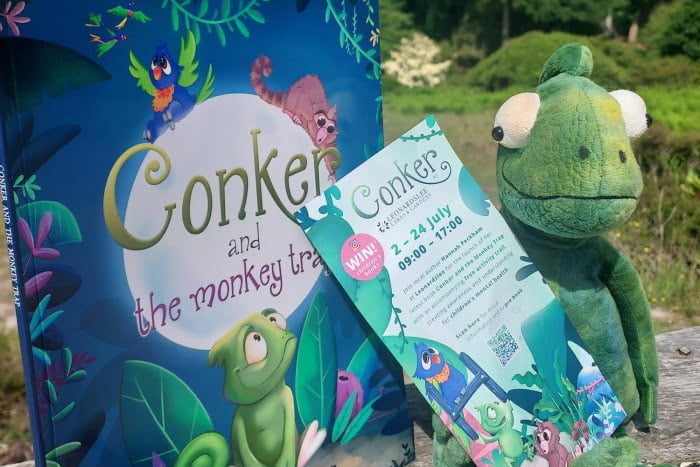
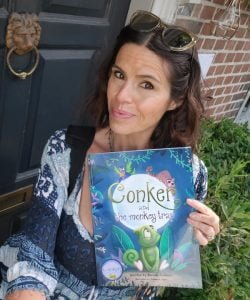
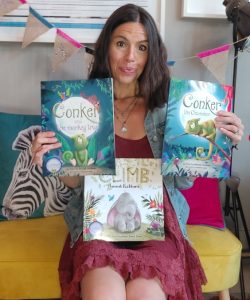
    Hannah Peckham, award-winning author and one of our YMCA Dialogue counsellors, has written an amazing new children’s book Conker and the Monkey Trap which explores the five steps of wellbeing. You might remember Hannah from our previous interview about her book Conker the Chameleon which focused on talking about feelings. Hannah’s books aim to open up conversations and give children the tools and vocabulary around feelings and wellbeing.

    For the launch of Conker and the Monkey Trap, there is a wellbeing trail around Leonardslee Gardens until 24th July. The trail is Conker themed and looks at different emotions such as happiness, sadness, worry or being cross. There are also exercises surrounding the senses, including useful breathing exercises. The trail will take you around the peaceful lake and ancient gardens, reiterating the wellbeing benefits of being in nature. Hannah will be there on 16th and 24th July to do a reading of her new book and run a short workshop for children at 11am. To get tickets to the wellbeing trail, click here – and for 50% off entry use the code: CONKER22


    We caught up with Hannah to find out more about her new book:

    What is Conker and the Monkey Trap about?

    The book looks subtlety at the five steps of wellbeing, focusing on things like being outside in nature, breathing and talking about feelings. It is a gentle introduction to the foundations of mental wellbeing. And it uses Conker again, the star of my first book, but there is also a lonely monkey and a rainbow lorikeet who all end up becoming good friends and helping each other. They learn that being brave isn’t just about waving a sword, it can be about asking for help, talking about your feelings, finding the courage to step out your comfort zone or even help someone else.

    In the back page there are some activities to consolidate the learning throughout the book. One activity is about what different things can be helpful if you don’t feel good inside. Another looks at bravery and what makes you brave, and how sometimes letting go can be the bravest thing to do, because sometimes if you don’t let go, worries can get bigger and bigger inside.

    Hannah peckham with her new book

    What was the inspiration behind the story?

    When I was doing my counsellor training, one of the tutors told us about the ancient South Indian way to catch a monkey, which has become quite philosophical surrounding letting go. It says to take a hollowed-out coconut and fill it with treats. The monkey reaches its hand into the and grabs the treats inside. Its hand is in a fist shape holding the treats; however, this means that it can’t get its hand back out of the whole hole. If the monkey could see past the treats and let go, it would be able to remove its hand. But because it’s so focused on the treats, it won’t let go and is stuck. This plays into modern society and can teach us about letting go, for example letting go of worries can help with your mental wellbeing. This was the philosophy behind my book, but all packaged up in a child friendly way.

    What do you hope to achieve through your books?

    All my books hope to start conversations and lay foundations for parents with young children. As a counsellor for YMCA, I work with young people talking about feelings, but my books aren’t about counselling, they are more about opening up those conversations with children and giving them the resources and emotional vocabulary to express themselves and to help them if they find themselves in a place where they need counselling. In 2021, an NHS survey found that 1 in 6 children have a diagnosable mental health problem. I have a 3 year old son, so I’m just hoping to open up those conversations and build that language around feelings and wellbeing and how important it is to have that vocabulary –just as important as it is to learn to count and all the other things primary school teaches. I want to give parents a tool to help with social and emotional learning.

    Many people don’t have those tools or vocabulary. But why not? And why don’t we teach them to our little people as a priority? Because when they do face difficult times, which everyone does at some point, they are vital resources to call on.

    What is your writing process?

    It’s really similar for each of my books. Some days I just don’t have anything in my head, but then it usually happens quite quickly, and an idea comes. For example, the Indian tale of the monkey trap was always in my head and when I sat down to write something else, Conker and the Monkey Trap came out instead.

    children's book

    Do you have any plans for future books?

    I do! I’ve written one which is possibly my favourite yet, and it’s about self-care. Some of my books are about giving to others, but it is also really important to look after yourself, and I think we live in a world where we often feel guilty about taking time for ourselves, taking time off work, setting boundaries etc. We often give and give until we fall apart. So, this next book is about a rather tired unicorn who has used up his magic, and I love it!

    And I have another one about a little fairy and mind maintenance and again, about good self-care and the little voice in your head.

    I have lots of ideas. They are all about wellbeing and being kind to yourself and others. They all have an underlying message.

  • GoodGym kicks off our garden revamp – but we still need your help!

    GoodGym kicks off our garden revamp – but we still need your help!

    The sun is shining and our residents have been inspired to tidy up their gardens so they can be used for outdoor activities and sessions, and feel more like a “homely” garden space over the summer. Many residents have taken an interest in gardening and started to learn about growing their own vegetables, maintaining plants and many other valuable skills along the way (read about our residents’ gardening stories here).

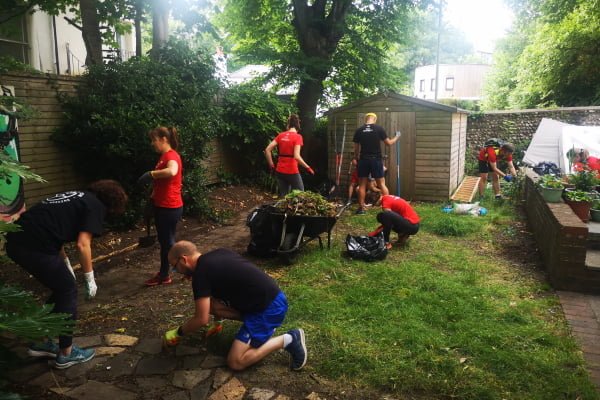
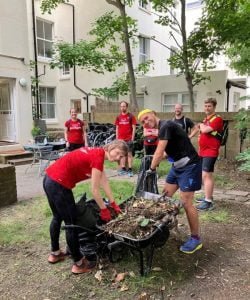
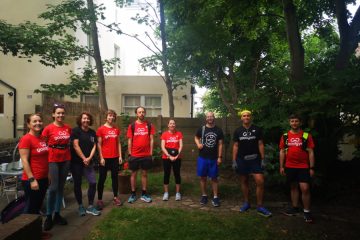
    To kick start this garden project, last week 9 GoodGym runners made their way 6km to tackle the weeds in one of our supported accommodation projects in Brighton. The garden has been unkept for many years, overtaken by weeds, dirt, and debris. The residents would love to be able to use this space and learn more about gardening, however the overgrown weeds and rusty furniture have been too big a task for them alone.

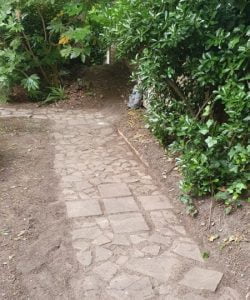
    GoodGym gardener    GoodGym path gardening

    In a follow up article about their gardening efforts, GoodGym said:

    The dead daffodils, sneaky sticky weed, and limp leaves didn’t know what hit them with a blitz of activity transforming the garden. Beating back the overflowing beds even revealed the long-lost path to the shed!

    Our whirl of activity drew attention from the residents who were delighted to be reclaiming the space and already thinking of ways to enhance its future.

    GoodGym gardening team

    Thanks to all the GoodGym runners who helped out, the garden has been brought back to life and is ready for the next step.

    Could you help?

    We continue on our mission to improve our overgrown garden spaces in our high support accommodation projects (they have huge potential). We have residents who are very interested in gardening, composting and animals, and we believe that giving them the opportunity to develop this garden space will be integral to their mental health and wellbeing.

    We are looking for volunteers, donations or funding for the following:

    • Labour – We are looking for anyone who would be willing to come and support us with tasks such as digging fresh borders, strimming, pruning, weeding etc.
    • Donations – 
      • Any spare or old gardening tools will enable us to pot plants, cultivate herb gardens and create/maintain flower beds with our residents.
      • Any spare or old garden furniture (tables, chairs, benches, etc.). Or decorative items, such as solar lights, fairly lights, garden gnomes, etc. we aren’t fussy and would be extremely grateful.
      • Finally topsoil, compost, seeds, pots and any other spare gardening utilities.
    • Brainpower– If you are a keen gardener or have a working or professional knowledge of gardening and can spare some brainpower, we would love to chat with you and get your thoughts on what and how we can improve the gardens and give us a basic idea of how to maintain certain aspects of the gardens so that once they are looking great, we can keep them looking as nice as possible for as long as possible.

    We would love for our residents to have an outdoor space that feels like their own, not only for them to relax in, but a place for them to learn new skills and take pride in. If you would like to help support any of our projects with any of the list above please contact [email protected]

  • Nature themed mural bringing joy to residents

    Nature themed mural bringing joy to residents

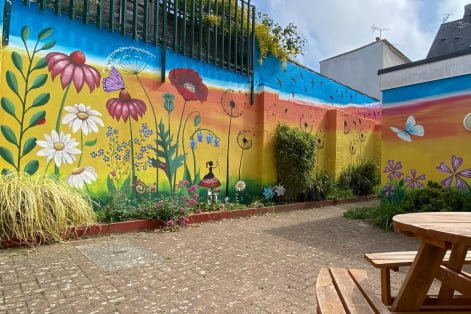
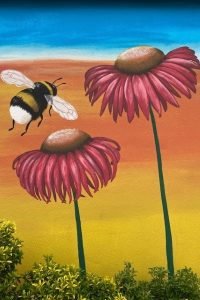
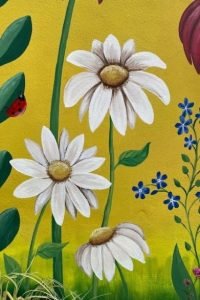
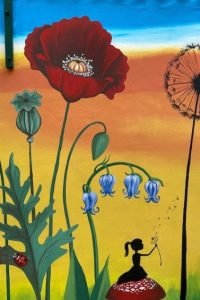
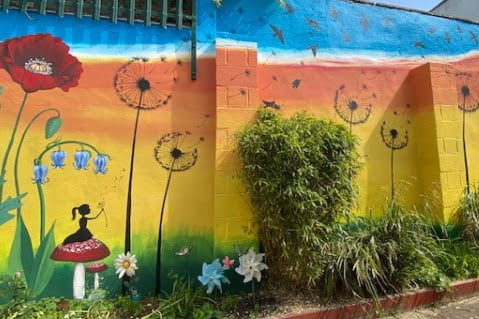
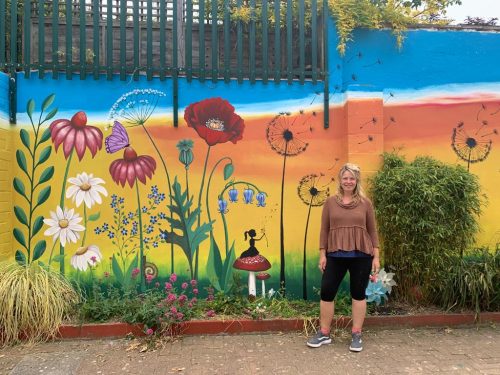
    Throughout June, Brighton based artist Carina (@carinathumbelina) has been hand painting a beautiful mural in the outdoor communal area in our young families project at Gocher Court. She wanted to bring nature into an enclosed space as it can instantly make people happy and bring colour into their everyday lives. When Carina saw our advert looking for a mural artist, she knew it was meant to be. Carina was a resident at YMCA Wellington while she was at college, and it was during this time that she discovered her passion for art and used it to channel what was going on in her life. She wanted to give back to YMCA after it had such a positive impact.

    The space at Gocher Court is important to residents and is often used for group work or socialising with one another. Many residents and staff thought it needed some colour and to be more inspiring, particularly as it is often the setting for some difficult conversations. Carina was the perfect person for the job, and has transformed the space into a magical, natural wonderland.

    mural flowers          mural flowers

    Carina tells us more about her mural and why it means so much to her:

    I’ve had a great time painting this mural! My previous/current work is as a Scenic Artist making sets, installations, props and décor for events and interior, but I want to create more spaces that bring people joy, to help improve mental health and wellbeing.

    I couldn’t believe it when the advert came up on my local Facebook noticeboard, I’d been looking for work as a mural artist and it could have been any space or anywhere, but it happened to be YMCA. I knew it was what I had to do.

    YMCA helped me when I was going through a rough time in my life. I was living with YMCA Wellington for 2 years while I was at college, and it was a really positive experience. It was at that point when I really focused and got into art, I needed to channel what was going on in my life into something positive and for me that was art. To be able to give back at this point in my life now that I’m all good, it means so much.

    mural little girl dandelion

    The little girl in the design represents the children here at Gocher Court. She is blowing on a small dandelion clock, symbolising her wishes and hopes for the future. The way that the dandelions become bigger and merge with the starlings show how these hopes and wishes can grow, and that this change can happen here in Brighton.

    I’m really drawn to the idea that if you immerse yourself in giant nature, it becomes a magical, oversized world. You can’t help but be affected by it when it’s giant. I want to create immersive environments and use them to improve people’s mood. I’ve had this vision for a long time and this project has been my starting point, I’m so grateful that YMCA trusted me with this huge blank canvas and I’m really happy with how it has turned out!

    Overall, I just want to make people happy and use my art to help people.

    Thank you so much to Carina for brightening up this space and bringing joy through your art!

    Carina is looking for more work as a mural artist so if you’re interested in finding out about her work, or want to involve her in another YMCA project, email her at [email protected]

  • Faith and queerness: a discussion around LBGTQU+ identities and religion

    Faith and queerness: a discussion around LBGTQU+ identities and religion

    Faith and Queerness: a discussion between colleagues. PRIDE month has given our organisation an opportunity to explore the lived experiences of both our LGBTQU+ staff and the young people we work with.  One of the issues raised by Joshua Pemberton, our Support and Advice Team Leader at Brighton’s Youth Advice Centre, is the sometimes difficult relationship between religion/faith and people in the LGBTQU+ community. How does ‘queerness’ or other LBGTQU+ identity fit with faiths that can be rejecting?

    Joshua reached out to Lucy McGrath, our Lead Chaplain, to discuss it and what follows is their very open and honest conversation. To be clear Lucy is answering and representing the view of our Chaplaincy work, rather than talking on behalf of any one faith group.

     Lucy’s questions for Joshua


    Lucy: You got in touch with me during this Pride month asking if I would write an article about Queerness and Faith, can you say why you think it is important to discuss this?

    Joshua: When I approached you for this article, I had recently been called out by a friend on some hypocritical points of view and was challenged about my genuine approach to intersectionality and being open to other’s beliefs.

    Anyone who knows me would know that I was quite shocked, being a person who regularly stands on my soap box to discuss intersectionality, inclusive practice and LGBTQU+ rights, I realized that while I had strong opinions and validation to support my perspective, I had missed something in my own understanding of faith.

    As my friend pointed out to me, faith is about accepting love, being open to the belief in something greater than ourselves and using that faith to support and teach others.

    My experience of faith had been something very different. I had seen faith used against me and my community to prove that my existence and place in this world was wrong or unwanted. I went to a religious school and felt very oppressed by the teachings, and it wasn’t until recently having conversations with straight-cis people who are religious and who love me, did I see that even if I don’t pray to a god, God’s love still touches me through the people I love.

    As a queer person, I am constantly asking others to be more open to the experience of others and listening to that, rather than pre-conceived ideas about gender, sexuality, gender identity. However, I realised in my fight for what I consider my rights, I had stopped myself being open to the views and beliefs of others, writing off faith as something I had nothing to learn from.

    I started to research into faith and queerness, and while Christianity came up, it seemed that Islam, BIPOC and Queer people of faith from other religions had more published experiences of lack of acceptance and dealing with the struggle between faith and queerness.

    I felt that as an organisation that spans multiple intersections of people’s lives – young people, mental health, faith etc, we should be asking ourselves how we approach faith and queerness and what we can do to support those communities.

    Lucy: When you applied for your role at YMCA did the ‘C’ (Christianity) part of YMCA raise any questions for you?

    Joshua: I think it made me nervous. I have been keen not represent myself in anyway religious and have atheist views in general. I saw YMCA as, Youth Minded Community Approach. However, as I have worked with the organisation and seen young people use the chaplaincy, I’ve realised that religion at its core is never the issue, just how we chose to use and navigate it. If we are open and honest and see faith as a way of passing a message of love, it has a place in all our lives, and can be used as a huge source of strength and support for all people.

    Lucy: What more can we all do, including me as a chaplain and all our chaplains, to help all those who identify as LGBTQ+ to feel a sense of belonging and acceptance, particularly the young people we support?

    Joshua: My belief is around advocacy and empowerment. Nobody has all knowledge, we need to consistently use our positions, our privilege, or any space we occupy to promote the voices in the room we cannot see or hear. If we look around in a room and think, who is missing from this conversation, who is not being heard, what can this person offer, and work hard to bring them in, have the opinions and needs met, then we are giving the opportunity for people to belong and accepted. The world works by hoarding all resources at the top of the pyramid, but this will always leave a marginalised base left to support the hierarchy, we need to challenge this – in faith, in organisations, in ourselves. Religious / faith figures – Jesus / Buddha – by making their greatest sacrifices gained the highest level of self-actualisation.

    Joshua’s questions for Lucy


    Joshua: How can Christianity be used as a mechanism to support LGBTQU+ people in our society?

    Lucy: I love the positivity of this question, especially given that many LGBTQU+ people have experienced huge damage and hurt through the Christian church, for example, through conversion therapy and more subtle methods like offering spiritual guidance and prayer aimed at changing people, rather than loving them as they are.

    I can’t speak for all Christians but I think the way Christianity can be used to support people is if we go back to Jesus’ teachings and example. Jesus extended his love not to one group over another but to all.  Jesus often hung out with those who were marginalised by society – and he spoke out against oppression. So many people have experienced rejection and persecution because of their sexuality or gender identity.  I think that breaks Jesus’ heart. One of my favourite psalms (139) in the bible talks about how we are all “Fearfully and wonderfully made”. I strongly believe God wants us to know we are loved just as we are –however we identify in terms of gender and sexuality.  But Jesus also talks a lot about justice – so as Christians I believe we are called to be his hands, feet, ears and mouth in the world – to speak up against oppression where we see it and to do everything we can to ensure all among us who identify as LGBTQU+/queer feel accepted and proud of who they/we are.

    I know there are people within the church with different views and sometimes this has caused divisions within the church. Recently (Nov 2020) after 3 years work the church of England produced a series of resources called ‘Living in Love and Faith’ looking at some of these issues.

    Joshua: How does YMCADLG Chaplaincy support LGBTQU+ / Queer people in our organisation? 

    Lucy: Good question, and it makes me wonder what more we could and should be doing. One very practical thing we do is when we recruit volunteer Chaplains we ask them all a question aimed at teasing out from them any attitudes we believe could be anything other than helpful to LGBTQU+ young people who live in our housing projects. I have met several young people whose confidence has been knocked and who have experienced rejection as a result of their sexuality and identity, and we want a team of volunteer Chaplains whose attitude is one of love and acceptance, so that young people can come along to chaplaincy sessions and experience a safe space where they are able to be themselves. Essentially, we want volunteers who transmit the message that someone is infinitely precious just as they are. I do remember one young man who was transitioning and who spoke at length over many months to the chaplains about what he was going through.

    One of the things I am most proud of was a volunteer Chaplain who came to accept her own sexuality through her experience as a volunteer with us. She was on a team with a Chaplain who identified as gay and one who identified as bisexual, and she worked with many LGBTQU+ young people.  This is what she wrote:

    I have lived in Brighton for 8 years and only became a “proper going-to church Christian” 5 years ago. In that time I have struggled a little with being someone with a faith in God and being open about my sexuality.

    Through the wonderful wisdom and honesty of some of the young residents and the support and acceptance from staff and my fellow chaplains, I now believe that it is possible to be both. I have gained so much more than I have given through volunteering for YMCA.


    Joshua: What would you say to someone who told you it was not Christian to be LGBTQU+?

     Lucy: I would feel sad and angry if someone said that to me.  That view feels so far from how I see God’s love. I would try to listen to their views and understand how they came to that belief (God loves us all after all) but I would also challenge them based on my own faith and beliefs, and my experience of God.

    ———-

    We would like to say a huge thank you to both Lucy and Joshua for taking the time to explore this subject and bring into the open some of the difficult issues that arise.

    Further reading on LGBTQU+ identities, religion and faith

    Below are some suggestions for further reading for anyone looking to go into more depth:

    Biographies:

    Lucy McGrath (Pronouns she/her) 
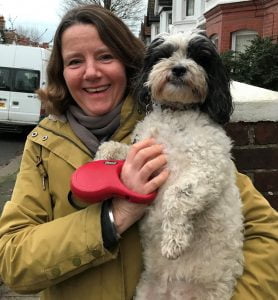
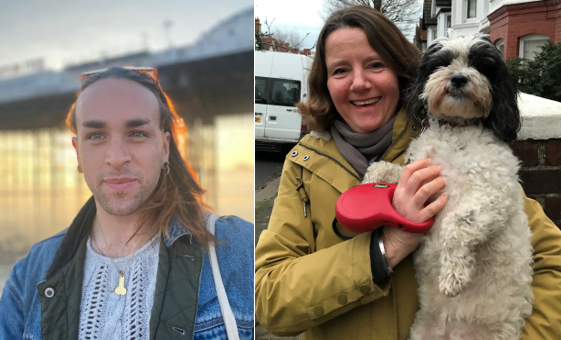
    Lucy has been Lead Chaplain for YMCA DownsLink Group since 2016. Her role involves working with a wonderful team of paid and volunteer chaplains to support young people who live in YMCA DownsLink Group housing projects, both 1-1 and through weekly chaplaincy sessions (which almost always involve food 😉). As a team they also: offer prayer/reflection spaces; organise celebrations and services for particular occasions; work to involve local communities and faith/church groups; offer 1-1 support to staff and offer crisis support. They also have a role as the ‘conscience’ of the organisation – helping ensure it lives out it’s values.    Lucy is pictured with her dog, Heidi, who is an honorary Chaplain. 


    Joshua Pemberton (Pronouns: Please Use My Name / They:Them)
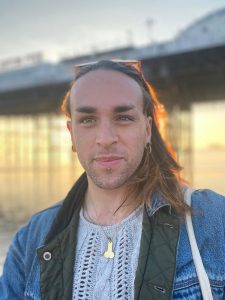
    Joshua works as a Team Leader for the Youth Advice Centre in Brighton, managing the generalised Support and Advice Team, developed for 13-25 year olds, supporting with mental health, sexual health, emotional well-being, anger management; skills, education and employment support, LGBTQU+ specialist advice and signposting and referrals.

    Joshua has ten years’ experience working with young people, with specific focus on inclusive practice, achieving multiple accreditations and awards within the charity sector for equal and inclusive practice in youth work. In addition, Joshua has a Masters in Sexual Dissidence, enabling them to use expertise in queer theory, sexuality and gender studies, to understand and analyse societal systems to promote intersectionality, inclusion and equitable practice for marginalised communities within oppressive systems. This offers them a unique and interesting insight into how intersectionality can impact young people’s experiences of services, and how we can improve and develop practice for a more intersectional approach.
     

  • Refugee Week 2022: Healing

    Refugee Week 2022: Healing

    Refugee Week takes place every year starting on World Refugee Day on the 20th June and continues until the 26th June. The theme for this year’s Refugee Week is healing.

    Taken from www.refugeeweek.org.uk:

    Healing means recovering from a painful experience or situation, so that we can continue to live. No-one understands this better than those who have lost their homes and had to build new lives from scratch. We have much to learn from refugees about holding onto hope when going on seems impossible…”

    Refugee Week logo

    In the last five years, we have looked after 68 UASC (Unaccompanied Asylum Seeking Children), with 38 of those being referred to us since April 2021. They have also come from 14 different countries, including Afghanistan, Iran and Syria.  

    Samantha Burton, West Sussex Chaplain, caught up with three of our UASC residents from YMCA Crawley Foyer, Kiki, Yousif and Ruta, to find out what difference YMCA DLG has made to their lives and to learn about how they look after their wellbeing.

    How has YMCA accommodation made a difference to you?

    Kiki: The YMCA has been very good for me – they take care of me, when I’m sick they check in with me and they make sure I am alright – make a drink if I need. For example, with current tooth pain, they support me to feel better and still get to college, which is very important. Also on Tuesdays, we are cooking together, eating together and talking, which has helped me with improving my English, and it’s welcoming. In the country that I have come from, I did not have these things. So being in England is better for me.

    Ruta: It’s made a lot of difference – especially the curfew at 11pm! That there is someone to check in on me and make sure I’m OK – like a parent would. I have lots of advice from all the staff, with any problems they help me out, and they have helped improve my English especially on Tuesday evenings because I have more people to talk to and I’ve improved my cooking skills.

    Yousif: YMCA has helped me feel safer, and to improve my English speaking. The night staff too are very helpful, if I don’t know a word, I feel I can ask them and they always help.

    What do you do to look after your own wellbeing?

    Kiki: Going to college and learning English to gain a job, and getting better with English to talk with people and when I am not at college I clean – this makes me feel better – and I also read books – for example I am reading the Bible and also a book about all the countries in the world, in English.

    Ruta: Sleeping! And chatting with the night staff helps me to forget my stress.

    Yousif: Going out with my friends and chilling in my room – with music, watching YouTube or movies on my laptop.

    What advice would you give to another young person starting their journey?

    Ruta: Stay strong and stay safe – don’t focus on the past, instead focus on the future.

    Yousif: Don’t go near bad people!

    What had made your journey easier?

    Yousif: Meeting good people in Crawley!

    Ruta: I really like the Tuesday Chaplaincy; it should happen more!

    To find out more about Refugee Week, please visit Refugee Week.